Showing posts with label Weather. Show all posts

Wednesday, June 21, 2023

Summer Sunrise Up the Lake

Wednesday is the first day of summer, a time of year we look forward to with much anticipation. One reason is long sunny days. Here's a wide angle shot to show you the difference between winter and summer sunrise at our float cabin at Hole in the Wall on Powell Lake.

Sunrise over the peak on Goat Island on the first day of summer is at 7:54 a.m. Sunrise on the first day of winter was well to the south and at 9:45 a.m.

Summer sunset over the Bunster Range to the west is at 5:34 p.m., making our summer sunlight last for nine hours and forty minutes. Compare that to less than two hours in December. Like Goat Island, the Bunsters are pretty tall. Even though direct rays of the sun are gone, it is light until well after 10:00.

What are you doing with all your glorious summer sun? -- Margy

Sunday, October 20, 2019

Remembering a Fierce Fall Storm

Our float cabin in 2001.
Storms in fall and winter are the worst. Low pressure systems build in the Gulf of Alaska, swoop down Vancouver Island, cross the Strait of Georgia, and head up Powell Lake. With the lows come rain and high winds. It's the wind that causes the worst damage.


Our first boat.
We bought our cabin in Summer 2001 and had several weeks of wonderful weather. The next Thanksgiving (the U.S. kind in November), I got a week off from work and went to Powell River on my own. The weather was partly sunny for my boat trip up the lake. Good thing, I'd never driven a boat alone before. Thankfully, John rode in formation to make sure I made it okay.

Stiff leg at low water.
After a few nice days a storm moved in. The rain was heavy and strong winds made the cabin jerk forcefully back and forth on her ¾” steel cables anchored to the cliff. On the backwards swing, the stiff leg (a log that prevents the cabin from hitting the cliff) bounced off the rock, sending reverberations through the float and into the cabin. With daylight, everything calmed. Whew!

Cliff anchor bolt with cable needing replacement.
The next evening a new low slammed into Coastal BC. The steel cables and their anchor bolts had been weakened the previous night. Just after dark, the wind blown motion of the cabin ripped a steel cable free. With the greater range of motion and stress, another cable snapped. With each gust of wind, the cabin swung far out into the lake, only to snap back, causing the stiff leg to ram into the rock wall.

Adding a second anchor cable for future storms.
The motion was constant and nerve wracking. The lake wasn’t safe to navigate, so there was no way to leave. To say the least, it was a very long night. Fortunately, the remaining cables held and I could talk to Wayne (still in California) via our satellite phone for moral support. You might think a night like this would have scared me away, but I love the cabin, and knew John built it skookum (strong) to be safe in all kinds of weather.

You can read the whole story in Up the Lake and learn how I got the nickname Frontier Jane. If you have a kindle or e-reader, Up the Lake is free from Amazon, Kobo, Smashwords, and many other online e-book sellers. -- Margy

Friday, December 07, 2018

Insulating a Canning Pantry

Pantry storage in the corner of the bathroom.
When we added a bathroom, I included a pantry for storing home canning, dry goods and other non-perishables. It may seem strange to have a pantry in the bathroom, but when you live in a small home using space wisely is important. Plus, it's on the north side, the coolest place during hot months.

Now that I do more home canning, I am worried about freezing temperatures while we are away on winter holidays.


I asked advice on my favourite Safe Canning Recipes Facebook page. Here's what I decided to do. I started by putting bubble wrap around the back and sides of my pantry shelf.


Then I covered the canning jars with a folded bath towel. To monitor the temperature I'm using a digital thermometer.


Lastly, I put cardboard (from our new BBQ) over the top of each shelf that has canning jars and let it drape over the front.


When the front doors are closed, it should make good insulation to help prevent my canning jars from freezing.

According to the National Center for Home Food Preservation, Accidental freezing of canned foods will not cause spoilage unless jars become unsealed and recontaminated. However, freezing and thawing may soften food. If jars must be stored where they may freeze, wrap them in newspapers, place them in heavy cartons, and cover with more newspapers and blankets.

Do you live in an area with freezing temperatures? How to you make preparations? -- Margy

Tuesday, June 05, 2018

Float Cabin Living: What is the weather like?

Wayne and I love watching the changing seasons at our float cabin. That's probably because we came from Southern California.

Here in southwest Coastal British Columbia we have moderate weather.


Summers are sunny and warm with only a few hot spells of 30°C. Fall and spring alternate between sun, clouds and rain with temperatures to the low double digits. Winter has more cloudy and rainy days with temperatures occasionally below zero and moderate snow on 10-15 days. As Canada goes, we're balmy.

An anemometer next to our wind generator.
Since weather is an integral part of our daily lives, it was natural for us to want to know more.

First we purchased an inexpensive portable weather radio. We listen to broadcasts from the Pacific Weather Centre of Environment Canada. Our weather 25 kilometres  inland varies somewhat, but it gives us a good idea about frontal passage and expected winds. When we hear the reports for Grief Point (in Powell River) and Sentry Shoal (a buoy south of Savary Island), we know what's coming.

Our manual and digital rain gauges.
Next came a digital thermometer. Then a wireless weather station by Acu-Rite that you can purchase at Walmart or other places that sell thermometers. In addition to temperature, it has a digital barometer and humidity gauge (hygrometer). A handheld anemometer gave us wind information, but you had to stand out in the gale to get a reading. (Oops, there goes Wayne off the deck. Just kidding!).

Solar-powered temperature gauge.
Finally we upgraded to an Oregon Scientific Complete Wireless Weather Station. (Eleven years later it's still going strong). It has a rain gauge, thermometer, hygrometer and an anemometer. Our probes are solar powered, the new ones require batteries unless you opt for the expensive professional model. There are also gauges for barometric pressure, indoor temperature and humidity.

The display panel inside the cabin.
The indoor display light is easy to turn on with a touch of the screen, saving batteries when electrical power is off.

The LED screen is easy to read and a memory feature lets us know what we missed while away.


US rain gauge into its new Coastal BC home.
One summer a good friend came to visit by motorcycle. And he had a big (literally) surprise for us. He used to be a fire captain. Part of his duties were to report precipitation to the U.S. National Weather Service. When the devices were retired, he got to keep two. One is now installed at our cabin.

Whether you start small like we did, or graduate to a professional station, watching the weather is fun. -- Margy

Sunday, June 03, 2018

Float Cabin Living: What happens during storms?

We love to be at our float cabin home in all seasons, so we're there for all types of weather. We are relatively safe in Hole in the Wall. The bay, promontory and nearby Goat Island protect us from the worst winds. On the open lake, especially in the area dubbed the “North Sea” just beyond First Narrows, storm winds out of the southeast can whip the water into three foot plus waves.


After storms pass, clearing northwest winds blast down First Narrows creating dangerous waves. I’ve even seen hefty workboats duck into Hole in the Wall for a brief respite. Traveling on the lake in our Hewescraft would be more dangerous than staying put.


The worst damage we've experienced is a dislodged chimney, broken anchor cables (Up the Lake Chapter 4), and a rust weakened BBQ that flew the coop leaving its legs sticking up like a dead bug. That’s not bad. Several cabins have been severely damaged.


The weight of snow on the float could be a problem. Fortunately Powell Lake’s weather is moderated by the nearby ocean. Snow typically sticks only a few days. The biggest problem we have is uncovering solar panels so we can continue to gather the limited winter sun.

Rain is the most common type of storm. If you live in a floating cabin, a little more water isn’t a problem. Thin cracks between the boards on the deck let the water run right through.


The cabin rides easily up and down on its anchor cables as the lake rises and falls from wet to dry seasons.

Additional weather videos you might enjoy include:

A Snowy Day at Hole in the Wall
Windstorm Waterspouts
Mother Nature Blowing Bubbles

So, let it storm and let it rain. We’re prepared. Are you? -- Margy

Tuesday, March 20, 2018

Sunrise Over Goat Island

This month the weather has been a mix of sun, clouds, wind, rain, and even some hail. Is this really spring?


Recently I was up early enough to be rewarded with a beautiful sunrise over Goat Island. In winter, the sun moves far to the south across the bay from our float cabin home.


During spring, the sun starts to climb up the side of nearby Goat Island until it crests the top in summer.


There's nothing like a sunny start to a nice, warm spring day.


Now I can get out and continue planting my float garden and deck pots. Is spring late in coming to your area? -- Margy

Friday, February 23, 2018

Second Sunset

This time of year we don't get many hours of direct sunlight at our float cabin home. The sun "rises" over the treetops at about 9:00 a.m. and "sets" behind more trees early in the afternoon. Of course, that is well before actual sunset.


Later we experience what we call second sunset. Sunlight skips over our cabin but illuminates Goat Island across the bay from our front porch. Starting at about 5:00 we watch the shadow of the Bunster Range walk up the face of Goat Island for the next half hour. We call that our "second sunset."


Of course, sunsets are only visible on sunny days. Those have been few and far between this month. -- Margy

Friday, February 09, 2018

Rainbow in the Notch

Today it was partly cloudy, but with extended periods of sun inbetween. Late in the day there was a shower over Goat Island backlit by the setting sun.

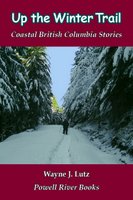
The rainbow started right in The Notch, a deep cleft in Goat Island's hillside. Wayne wrote about hiking part way up this very steep creek bed in Chapter 6 of Up the Winter Trail.

Excerpt from Up the Winter Trail by Wayne J. Lutz
 
The stream is still narrow but now rushing. I see a triple falls above me, and it seems there’s no way to go higher. So I veer off to the side, finding a boulder with a log wedged above it. I try to use the rock and log to climb up the cliff and out of the ravine.

My first attempt sends me back down to safer footing in the bed of the creek. Then, I find another route that leads up the opposite side. By kicking my boots into loamy outcroppings in the cliff, I use toeholds and tree limbs to heft myself up and out of the canyon.

I emerge from the Notch into an area covered with prickly blackberry vines – “nature’s barb wire,” as John calls it. The vines grab at my pant legs and boots, and I try to kick them away. This is hopeless, so I use my walking stick and gloves to tear the vines away. Some I drag along with me.

I walk along the top of several logs that criss-cross over the vines, leading to a huge, smooth boulder. It’s a perfect place to rest. I spread my whole body on the granite surface, lying down flat on my back. Sunlight filters through the trees as I relax in this placid spot.
Up the Winter Trail is available in print and ebook formats from Amazon and other online booksellers. Print versions are also available in Powell River at Coles bookstore. -- Margy

Tuesday, January 30, 2018

A Snowy Day at Hole in the Wall

Even though we live in British Columbia, we don't get that much snow. Our location near the coast moderates our climate.


But when we do, it's an exciting event for me. I grew up in Southern California and the closest I came to snow was looking at it high on top of the San Gabriel Mountains.


Over the weekend we had a brief period of snow. But you had to be fast, it melted almost as quick as it arrived. Here's a short video Wayne took to share with you.


How has your winter weather been? Or are you one of the lucky ones south of the equator enjoying warm summer days? -- Margy

Tuesday, September 19, 2017

Thunderstorm at Hole in the Wall

We experienced a passing thunderstorm at our float cabin home in Hole in the Wall last Sunday.


It came from the west, over the Bunster Range so the cabin protected our front porch. But the middle of the Hole really got churned up. It passed quickly, but not before giving us strong winds, huge raindrops, a bit of hail and thunder and lightening.

Living in Hole in the Wall lets us have lots of experiences we wouldn't have if we still lived in the city. What do you like most about where you live? -- Margy

Friday, July 21, 2017

Goat Lake Reflections

On our recent trip to Goat Lake we had beautiful weather.

Goat Lake reflections on a calm afternoon.

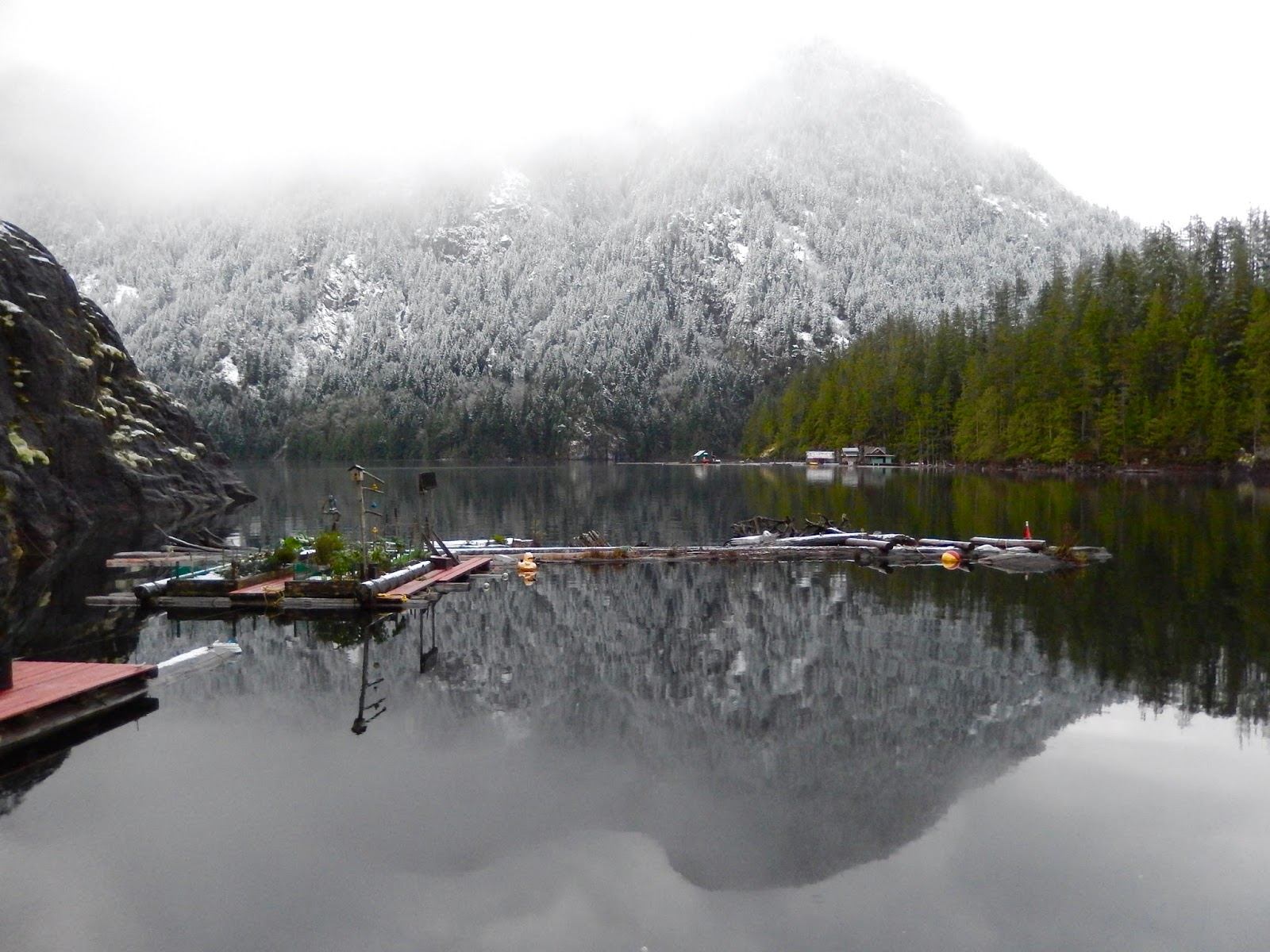
After mid-day uplake winds calmed we had a beautiful view with mirrored reflections to the southwest. -- Margy

Wednesday, February 15, 2017

Snow Load on the Deck

Last week we had more snow than ever before. We usually get light dustings, but last week we got deep wet snow.

For a land cabin, it's an inconvenience. For a floating cabin it's dangerous. The excess weight can sink the float foundation, and uneven loads can even flip a cabin over.


Snow weighs between 4 and 20 plus pounds per cubic foot depending on the wetness and compaction. Ours was about 12 inches thick and slightly refrozen. We have a 40 x 40 foot float with 1600 square feet of surface area including the roof.

12 inches deep X 1600 square feet = 1600 cubic feet of snow
1600 cubic feet X 20 pounds = 32,000 pounds = 16,000 tons

WOW. Our cabin sank almost a foot! That was enough to cover our cedar log foundation. That's VERY scary!


The only solution was to get shoveling. Wayne and I worked all day. We got most of the snow off of our ancillary docks and the cabin float. We were feeling pretty good until we got more snow that night.

The next day we were at it again, removing snow that slid off the roof and the new accumulation. We continued into the following day, but were finally assisted by some sunny weather followed by rain.


Kind of reminds me of an old Tennessee Ernie Ford song:

You shovel sixteen tons and what do you get?
Another foot higher and lighter you bet.

The crisis is over and float cabin life is back to normal. Whew! Even Mr. Ducky has lost his white parka.

Are you contending with snow? How our you doing? -- Margy

Friday, December 16, 2016

The Cold Moon

December's full moon is called the Cold Moon. It was highest at midnight and the brightest moon of the year.

That's a good name for it here in Coastal BC. We've had two weeks of zero and sub zero temperatures, and even a bit of snow.


The clouds parted just enough for me to get a shot of the Cold Moon.


The halo around the moon shows there are ice crystals in the atmosphere, ready to give us another dusting. -- Margy

Tuesday, October 25, 2016

All Fall Down

Fall has come and is quick to go. After a recent windy storm, the maples let loose of their leaves.

And they graced the surface of our watery front yard just before sunset.

Watery front yard you ask? Yes, we live in a float cabin on (literally) Powell Lake in British Columbia.


If you would like to learn more about this type of lifestyle, take a look at my categories Float Cabin Living and Float Cabin Construction. If you have any questions, just leave a comment and I'd be glad to answer them. -- Margy

Thursday, October 06, 2016

Red Sky at Morning, Sailors Take Warning

This time of year you have to really start paying attention to the sky. Heading out on the ocean, the weather can change quickly. You need to plan for a safe return to port just in case. The old adage,  "red sky at morning, sailors take warning" worked in this case.

Mitlenatch Island in the Strait of Georgia

Soon after we returned to Powell River's Westview North Harbour, rain began and the wind started picking up. The saying has been around for ages and has a scientific basis. Clear skies to the east allow the sun's rays to hit the undersides of clouds coming in from the west.

The other half of the rhyme is "red sky at night, sailors delight." Unobstructed rays herald westerly winds and clearing skies.

Sunset up the lake.

We get wonderful "red sky" sunsets here in Powell River. BC. -- Margy

Friday, September 02, 2016

Morning Glory

I've been getting up in time to watch sunrise lately. That's not so bad. The sun doesn't crest Goat Island until 8:50 am this time of year.

Morning sunrise reflection on the lake.

One morning this week when I went out on the cabin deck, I saw the sunrise reflection in the calm lake surface.

Wispy clouds broke the rays of sunshine into a colourful halo.

When I looked up, I saw the same rainbow reflections in the cloudy halo surrounding the rising sun. It was the start of a glorious morning. -- Margy