Showing posts with label Power. Show all posts

Tuesday, June 16, 2020

"Off the Grid" by Wayne Lutz

Our float cabin on Powell Lake is the perfect home for Wayne and me. And its water access only location 25 minutes up Powell Lake makes it totally ...


Coastal BC Stories

The 10th book in the Coastal BC Stories series by Wayne J. Lutz lets you know more about what it's like to live off the grid. We were true city-folk when we bought our cabin, but have learned how to generate our own power, use propane for appliances, maintain a kitchen garden, live in harmony with nature, and exchange our hectic lives for a more simple lifestyle. If you've ever dreamed of living away from town in an off-the-grid cabin, you'll enjoy reading Off the Grid.


Check here if you need a Kindle or Kindle App.


Or go to PowellRiverBooks.com for more ordering information. -- Margy

Sunday, May 27, 2018

Float Cabin Living: How do you get power? Propane

When we purchased our float cabin, it came with propane lines installed.

In the city, we were used to natural gas for heating and appliances, but propane in large tanks was new and a little scary.

Now that we are more comfortable with propane, we use it for the stove, a refrigerator, lights and other applications.

Wayne at the outdoor propane shed.

Getting propane up the lake is a lengthy process.

Our Hewescraft lake transport.
Empty tanks go for a boat ride down the lake. Because they are light, we can hand carry them up the dock to the truck. At City Motors or Vanderkemps they become heavy with compressed gas. Back in the truck, the process reverses. A dolly moves the heavy tanks back to the boat for their ride home.

We use 20 pound tanks for our BBQ. There's nothing like a grilled dinner on a cold winter night. The front porch gives Wayne a protected spot to work his dinner magic.  A 20 pounder costs $22 and lasts about three months. That's pretty economical.


We use 40 pound tanks for lights, refrigeration and cooking.  A 40 pounder costs $44 and lasts about a month. Again, that's an economical source of energy. We found an auto-switch Y-valve for continuous propane distribution.


It's tough in winter to generate enough solar power to run electric lights for more than a short time each night. Even on a sunny winter day we only get about two hours of direct light. Our winter alternative is propane light.


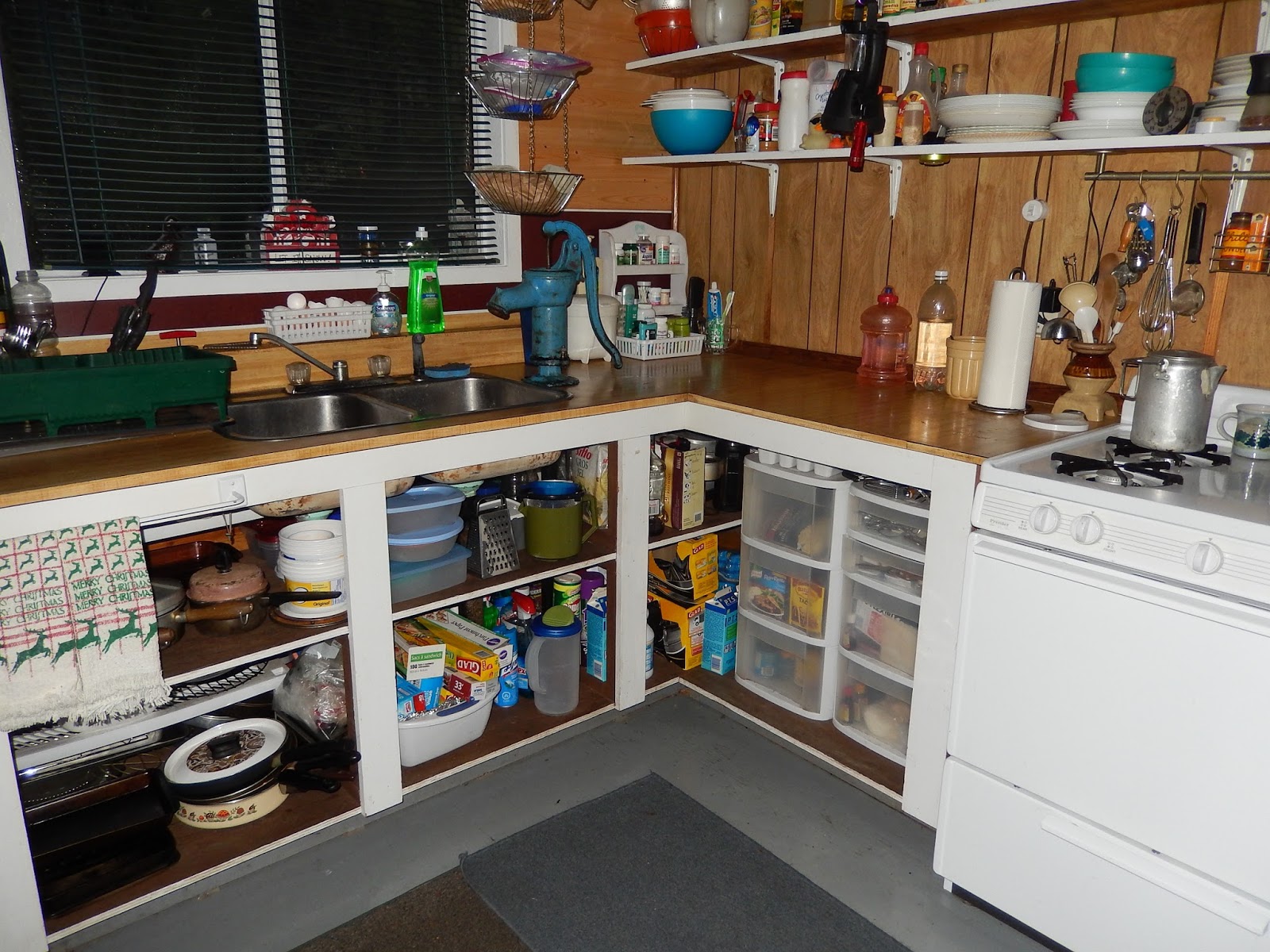
In our kitchen we have a Premier propane range. It has four burners and an oven with two racks and lots of room that makes baking easier than in my old oven. The pilot lights use minimal propane and make cooking easy.


We upgraded our old 8 cubic foot fridge to 13 cubic foot Unique propane refrigeratorNow we have all the refrigerator and freezer space we need.

How does a gas flame create cooling. The Gas-Fridge.com website says: "The basic principle is through evaporation. An ammonia mixture sealed inside the cooling unit is heated by a gas burner, which causes it to circulate before it evaporates and creates a cooling effect."

We also use Big Buddy portable propane heaters. One use is in our Hewescraft during winter to make our 30 minute boat rides more comfortable. It mounts safely in the front of the boat's cabin. It has auto-shutoff safety features and runs on either canisters or a 20-pound tank.

A second Big Buddy warms our winter outdoor porch shelter. With a little heat we can still eat outdoors on many nights.


Click below for more information about our various off-the-grid propane uses:
 
Using Propane for Power
Search for a Propane Refrigerator
Freestanding Propane Range 
Kitchen Kapers
Off the Grid Refrigerator Repairs
Propane Lights
Mr. Buddy Propane Heater

Propane makes off the grid living much easier. It's also an alternative in town for natural gas. Do you use propane? What do you think? -- Margy

Friday, May 25, 2018

Float Cabin Living: How do you get power? Solar

Our solar power generation has separate systems for specific functions.

Solar panels on our roof facing south.

That way our power needs don't have to rely on one source. When we first got our cabin we started small and have grown our systems over time. We've also learned a lot about how electricity works.

Cabin battery bank in its storage box.
Our main cabin system has two solar panels. Our oldest one is 125 watts and the newer one is 200 watts. They feed into our electrical panel at the back of the cabin to charge 6-volt batteries wired in serial pairs to produce 12 volts to run our cabin systems.


The Gemini with her solar panel on top.
Later we added a separate solar system on Wayne's writer's retreat (boat). The 300-watt panel charges eight 6-volt batteries. This system provides power in the boat and to the cabin via a battery switch in the main electrical panel.

Through our electrical panel at the back of the cabin we can choose to use either our boat or cabin power source. During the day we use Gemini's power and leave the cabin's system charging. Our daytime electric needs are minimal, so the Gemini can charge and supply our simple daily needs at the same time. After dark, we change to the cabin source. That way we never deplete the batteries at either source.


We have other solar solutions for specific purposes. The first is on my garden float. A 15-watt panel charges a 12 volt battery that's runs a switch controlled boat bilge pump powering a hose to keep my garden moist in summer.


Another solution uses a 60-watt set of panels. It came as a package complete with three 20 watt panels, frame, connectors, charge controller, and inverter. It provides continuous power for the fan in our compost toilet.

Installing a new panel on the woodshed roof.
Our newest solution is a 40-watt panel to keep the battery charged in Wayne's sailboat. During winter the battery runs low. No battery, no bilge pump. No bilge pump, you get the picture. Even with low angles and direct sun the panel keeps the battery going when we are away.

Our separate systems work well for us, especially in the winter when power generation is limited.

The float cabin with it's solar panels on the south side.

Here are some additional posts about solar power:

Starting to Use Solar Power
Volts, Amps and Watts
Solar Charged Battery Packs
Sunrise, Sunset
Watering with Sunshine
Solar Powered Xmas Lights

What are some of your solar uses and solutions? -- Margy

Wednesday, May 23, 2018

Float Cabin Living: How do you get power? Alternative Power Solutions

Winters are problematic for generating electricity with solar power.

Winter sunrise at Hole in the Wall.

After two cloudy days, we can’t use our electrical system without draining our storage batteries below the critical 12.0 volts. We then have to rely on alternative power solutions.

Wind Power

We install a wind generator at the cabin.
John and his dad Ed said it was a waste of money. The best place to get out of the wind is Hole in the Wall, but we've been here for winter storms with lots of it. One day we were walking through Canadian Tire with John and there was a sleek Air X model on display. John was sold.

The AirX mounted on a John built mast.
First we had to decide where to place the unit. The cliff would catch the most wind, but the distance from the float for wiring was too extensive.

The outer corner of the upper deck was selected as the most advantageous position. It would catch the wind from the east (storms) through the west (clearing). North winds would be blocked by the sheer cliff in that direction.


The AirX with a custom pole mount.
The wind generator did not come with a mast. John created one from a hand-milled 4X4 twelve feet high topped by a galvanized pipe going up an additional eight feet.

All of the components, including the heavy electrical cable, were salvaged from John’s shed or the local recycling yard. That’s the great thing about John, he can make something out of nothing in true British Columbian style.


The wind generator is connected into our cabin electrical system. We can charge our storage batteries using both solar and wind power.


Now, when it's dark or cloudy, we hope for wind. It takes speeds of 10 mph (16 kph) for our turbine to generate enough power to start charging. But now you’ll hear us cry, “We’re making electricity” on a cold stormy night rather than our old song, “I wish the wind would stop!” At least until it reaches 45 mph (72 kph). That is the speed when the blades stall to protect the unit from internal damage, and we hold on tight and hope our cables to shore don’t break.


Gas Generators

When all else fails in winter, we resort to a gas generator to keep our battery banks charged.


We have an additional large capacity generator that is only used for running large tools such as our electric log splitter in the woodshed. It's so rarely used that the tank never seems to run dry.


Alternative Power Solutions

Here's some additional reading about our alternative power solutions.

What Happens During Storms
Weathering the Wind
Winter Power Solutions
Winter Power Backup
AirX Wind Generator
DC Lights
Gas Generators for Alternative Power 
Mastercraft Gas-Powered Generator
Thermoelectric Power

You’ve heard a lot about our alternative power generation. Do you have a system that you want to tell us about? We are always looking for new options.

Want to know more about float cabin living? Wayne's written a book: Off the Grid: British Columbia Stories. It includes stories about how we do off-the-grid living on Powell Lake in Coastal BC. It's available in print and e-book formats at Amazon.com and other online booksellers. -- Margy

Friday, January 05, 2018

Winter Power Solutions

We use the sun as our primary source to generate electricity.

Winter Solstice sunrise and sunset.

During winter, it can be problematic. On the shortest day we only get two hours of direct sunlight.

A foggy sunset at Hole in the Wall.

On top of that we get stretches of cloudy weather. Even when the weatherman promises sun, it often turns foggy. So we use several winter power generation alternatives. One is wind. When we get storms it helps charge our battery bank.


Thermoelectric power generation is common in industry. On a small scale, it's more experimental. We tried a unit made in West Virginia, but there was limited success. I still think it's a great idea for woodstove heated homes.

A thermoelectric generator using woodstove heat to create electricity.

Our fallback is a 1000 watt Yamaha generator. It's fuel efficient and relatively quiet. On cloudy days we run it in the evening for five hours to directly power electric devices such as computers and a small television to display movies. 

A fuel efficient and quiet Yamaha 1000 watt gas powered generator.

At the same time it tops off our two battery banks to keep them in good shape and provide us with power for the following day.

The cabin battery bank in its protective storage box.

Our most important winter power solution is to minimize our use of electricity. We monitor our batteries carefully, and switch everything off when levels become low. Being off the grid means we are responsible for meeting our own needs. It also means there are no unexpected power outages during winter storms. I like it that way.

You can read more about float cabin living by selecting Float Cabin Living and Float Cabin Construction in the topic list on the right side of this page.

You can also read about our off-the-grid lifestyle in Wayne's Coastal BC Stories series books including Up the Lake, Farther Up the Lake, Off the Grid and Off the Grid: Getting Started. All books are available in print and e-book formats from most online book sellers. -- Margy

Tuesday, April 18, 2017

Off-the-Grid Living

Wayne and I have chosen to live where we are surrounded by nature.

We've always been outdoors kind of people. We met each other on a flying camping trip to Canada and have gone on many adventures since.

In 2000, we stopped at the Powell River airport for fuel and an overnight stay. We fell in love with the area, so we returned the following summer and discovered floating cabin. We knew immediately it was where we wanted to live.


One of the main draws was the opportunity to live a simple, off-the-grid lifestyle. Off-the-grid is typically defined as living away from public utilities, especially electricity.

Our float cabin isn't connected to electric, water or sewer grids, so we had to find other ways to handle our utilities.

The cabin came with propane as a power source for lights, refrigeration and cooking, and a woodstove for heat.

The cabin floats on the surface of a freshwater lake so our water source was located four feet below our floor.

A hand pump at the kitchen sink brings water into the cabin with just a few pumps of the handle.

Because we wanted to have some electricity for cell phones, computers, lights and a few small appliances (think shaver, spice grinder, radio), we installed a solar panel and two batteries. Over time, that has grown to three panels and two sets of 8 batteries.

To augment our solar power we added a wind generator, but we only create power during stormy weather.

During winter we periodically recharge our batteries with a 1000 watt fuel efficient generator that's fairly quiet.

When we purchased our cabin we started with an outhouse that was three flights of stairs up the cliff.

When started living here full time we upgraded to a compost toilet and added a bathroom onto the cabin.

Off the grid living isn't for everyone, but for us it's the perfect choice.

Want to know more about float cabin living? Wayne's written a book: Off the Grid the Grid: British Columbia Stories. It includes stories about how we do off-the-grid living on Powell Lake in Coastal BC. It's available in print and e-book formats at Amazon.com and other online booksellers. -- Margy

Wednesday, December 09, 2015

Voltage, Amps, and Watts

Solar panels and a wind generator on the left.
My last job was in technology for a school district. But, I have to be honest, electricity has always baffled me. Fortunately Wayne, a physics major, has a better grasp. We live off the grid and have to maintain an electrical system with storage batteries that allow us to use electric devices.

Our electrical closet, the heart of our system.
What is electricity? Sparkfun defines it as the flow of electric charge. Current electricity moves. That's the kind we use when something is plugged in. Static electricity is stored energy, like in our batteries.

Our Air-X wind generator.
Our system starts with electricity generated by the sun, wind, woodstove heat, and a backup gas generator. Then it flows as a current to our batteries, is stored, and available for us to use.

How do you measure electricity? That's where voltage, amps, and watts come in. Voltage, measured in volts, is the force that makes electricity move through a wire. Our battery banks are connected in a 12-volt configuration.

The inverter is the silver box on the right.
An inverter changes the DC (direct current from our off-the-grid sources) to AC (alternating current) and boosts the voltage to 110 so we can use small appliances. The current is the flow of electrons through the wire and is measured in amperes (amps). Voltage and current give you electrical power (which is measured in watts). All of these are terms I've heard, but didn't need to understand until we started making our own electrical power.

The black switch changes from cabin to boat.
That enough of the technical stuff. Here's our system. It's grown over time, starting with one solar panel and two storage batteries in 2001. It's increased to two solar panels, a wind generator, a woodstove thermoelectric generator, and six batteries. In 2006, we added a separate system in Wayne's writer's retreat boat (the Gemini) with one solar panel and six batteries. A switch in our electrical panel allows us to use one system while the other recharges.

Last summer we decided to replace our batteries. After lots of research, Wayne decided to stick with 6-volt golf cart style deep cycle batteries connected together in a series of two to make a 12-volt system. Each pair is then connected in parallel to remain at 12-volts, but increase the storage capacity.

The Gemini with her solar panel on top.

Golf cart batteries last about ten years. We've had to replace a few, but our cabin system lasted fourteen years and the Gemini system lasted nine. Of course, we asked our good friend John (who built our cabin in the first place) to help us. He returned the worst batteries for a refund, but kept ten to use at his cabin. Waste not, want not.

John installing new batteries to the Gemini system.

We replaced all of the batteries at once because they were close to end-of-life, and it takes only one marginal battery to make a system less efficient. With winter and less solar input on the way, we wanted optimal storage capacity and output. So far, so good. We haven't had to use the backup generator yet.

The cabin battery bank in its brand new storage box.

In a future post, I'll let you know some of our tricks to stretch our electrical budget. -- Margy

Tuesday, January 21, 2014

DC Lights

Living off the grid, you conserve energy. We generate electricity using solar power, a wind generator, a thermoelectric generator on our wood stove, and a backup gas generator. Even with all these, our batteries don't last long in winter. We don't use large electric appliances or heaters, but even energy efficient AC lights (LEDs and fluorescents) drain a significant amount of power.


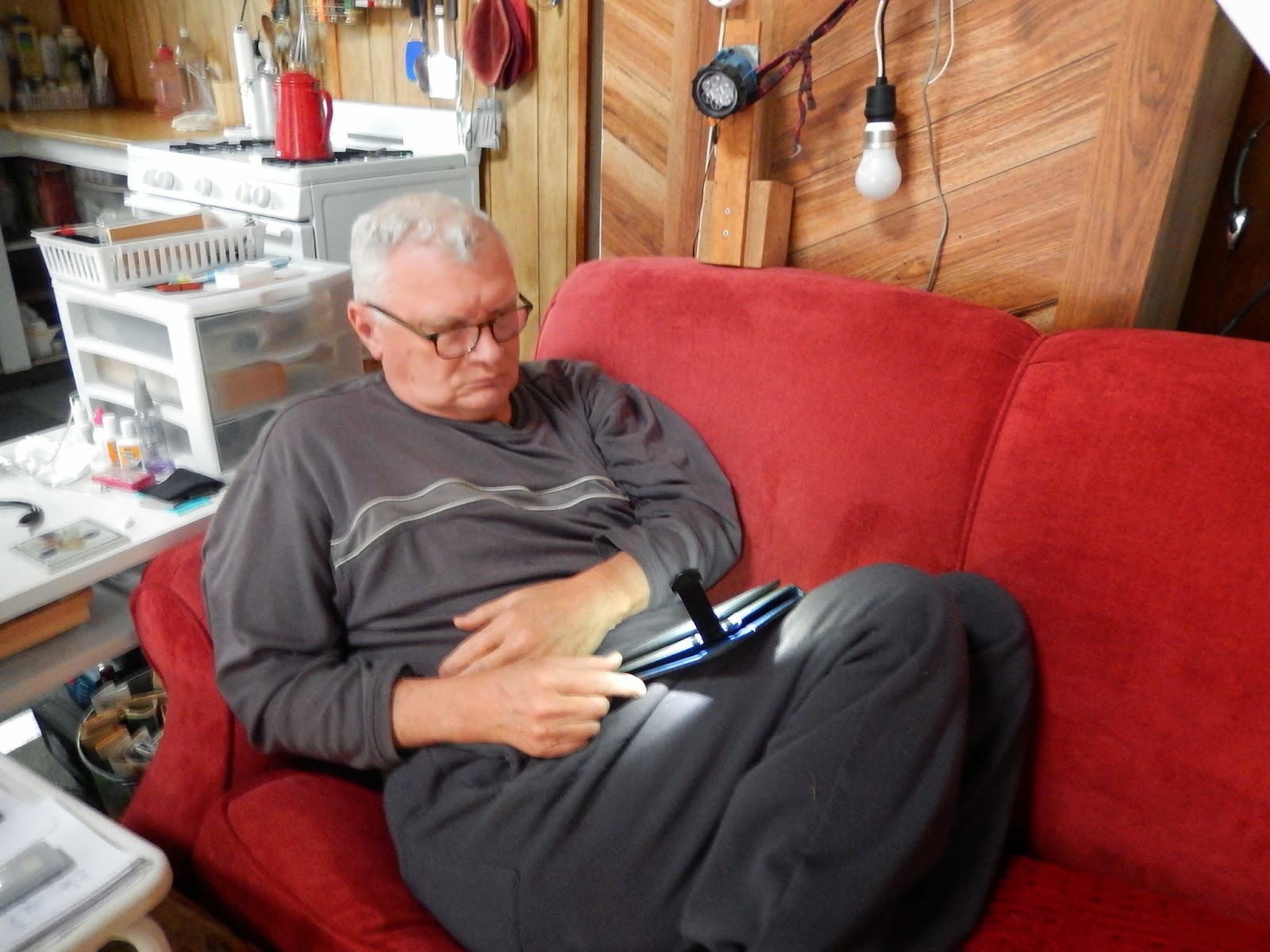
At Marine Traders, Jim, the owner, showed us some pre-assembled DC lights we could run off our battery packs in the cabin. We've used the DC LED emergency light that came with the pack for several years, but it doesn't provide as much general lighting as the new bulbs.


DC lights are low voltage, and use virtually no power. This is a perfect solution for long winter nights. For now, we've hung two of the new lights over the sofa. Maybe we'll install some more permanent fixtures in the future.
Do you use DC lights or other appliances? What works well for you? -- Margy