Saturday, January 18, 2020

Float Cabin Deck Replacement Part 1

Spring 2018 before pressure washing.
My last post was about major maintenance and improvement projects we've done at the float cabin over the last two decades. I left off our most recent one so you can see it in perspective.

Just like any home, it's only as good as the foundation.

After removing the stain aging was evident.
Over the last 22 years, time and weather have taken their toll.

Periodically, we've replaced individual boards and a few supports to extend the life of our foundation and deck, but in 2019 it was evident that we needed to do much more.

Our float cabin's raft during construction.
But first, a little history. Our cabin floats on a lashed together raft of 40-foot cedar logs. Cedar is durable and buoyant. Floats do get waterlogged, but adding plastic barrels underneath gives increased flotation. The best news, our cedar logs are in good shape.

Crosswise logs and steel cables secure the float logs together. On top, pony walls of vertical then horizontal 2x4s are nailed into the cross-member logs. This provides a level platform for the cabin and deck.

The pony walls are then added to the float log foundation.

Vertical 2X6" boards are nailed on top of the pony walls. Throughout this process, everything is double-checked to make sure it's level.

To support the deck boards, vertical 2x6s are nailed on top of the pony walls.

Yellow cedar is best for decking. Next is old growth red cedar. Last is second growth cedar. Most of our foundation was yellow cedar, but a few spots included second growth wood.

A second growth cedar log on top was replaced with an old growth cedar beam.

Our good friend John (and cabin's builder) replaced our deck. When he took off the old boards, he discovered several supports that needed replacing. In particular, a second growth log was rotten. He chose to replace all 40-feet with milled 6X6" beams.

Here are some related cabin construction posts:

Float construction
Extra Flotation Power
Pumped
Log Burning for Dry Rot
Cable Up - Anchoring System

In Part 2 I'll tell more about the deck replacement process. -- Margy

Thursday, January 16, 2020

Float Cabin Deck Replacement Part 2

Cedar boards heading up the lake.
This is the second post about replacing the cedar deck at our float cabin. In the previous post, I gave you a little history about how our good friend John built our cabin's foundation and deck.

If you missed it, scroll down to the next post.


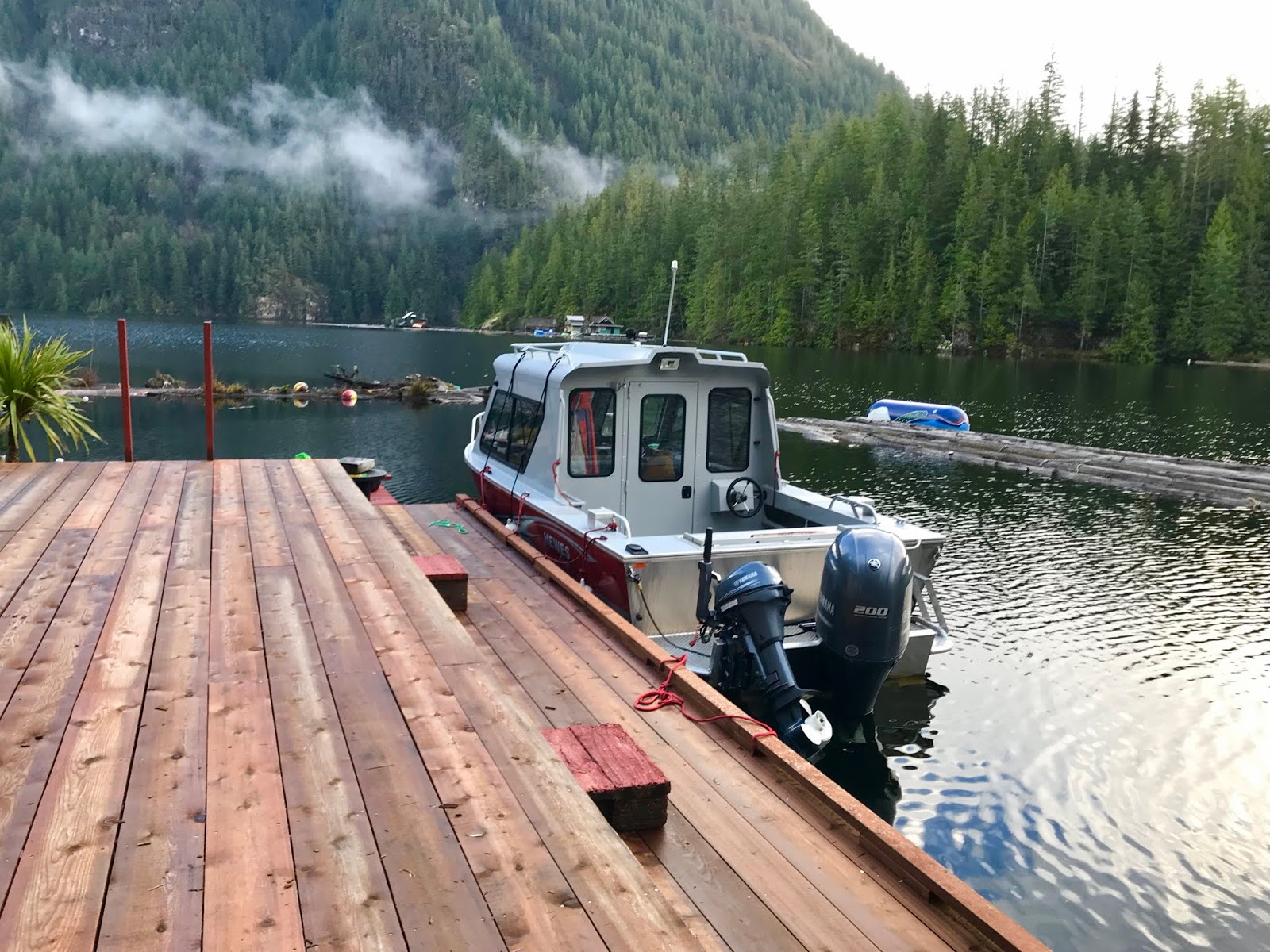
The Hewescraft is a great work boat.
John did the whole project for us. He arranged for old growth cedar boards to be cut to specification. The largest load went up on our barge.

Extras went up on our Hewescraft. Both of these are great work boats.


To give John the time and space needed to work, we coordinated it with our Snowbird RV Adventure to the States.

John repaired the foundation pony walls before replacing the deck boards.

John replaced the cabin's deck a section at a time. Work went from October through December. We were able to get up to the cabin during construction to check on things and enjoy our off-the-grid home.

The cabin front deck, half old and half new. Can you see the difference?

Here are the results. I love the look and smell of fresh cedar lumber.

The side deck and boat dock looking towards Goat Island .

The rear side deck and dock. John added a bull rail to secure our boats with ropes.

The side and front deck.

The front deck looking towards the transition float to shore.

Waste not, want not. John cut up the old deck boards to become future firewood. What wouldn't fit into the floating woodshed remains on our cedar log work float.

Cut up deck boards stored on our cedar log work float.

Old deck boards cut up and stored in our floating wood shed.

Now we are set for another 22 years at the least. Who knows how long we can live up the lake, but if we are able, the sturdy deck and foundation repairs will support us. -- Margy

Tuesday, December 31, 2019

5 Favourite 2019 Powell River Books Blog Posts

Each year I enjoy sharing blog posts from throughout the year that were favourites with my readers. Here are the top 5 for 2019 in order. Click the titles to read the complete posts.


1. 5 Acres and a Dream by Leigh Tate:  I enjoy reading books written by people, especially women, who homestead or live off the grid. Leigh's homesteading book was both engaging and helpful at the same time. And I continue to follow her blog.

5 Acres and a Dream: The Blog link.

Related post: Becoming Wild by Nikki Van Schyndel who also participated on the History Channel's Alone: The Arctic this year,


2. Back Up the Lake:  In late March we finally got back to our float cabin home after a two month stay down in the States for our Rental RV Road Trip and an extended period in Bellingham. Coming home is always such a wonderful feeling.

Our Powell Lake float cabin home.

Related post: Remembering a Fierce Winter Storm recounts the story of a massive storm during my first solo visit to the float cabin in 2001.


3. Spring Garden Update: After an additional six weeks in the States, we got home in late May. There was just enough time to prepare my floating garden and containers on the cabin deck for planting.

Preparing the floating garden for late spring planting.

Related post: Renewed Raised Bed Floating Garden tells how John replaced rotting cedar sides and decking to refurbish my garden float.


4. Coastal BC Plants - Indian Pipe: As I discover new and interesting British Columbia plants, fungi, insects, animals and birds, I write about them on my blog. Click the links to see the posts.


Related post: Cabin Journal: Beds, Bugs and Birds. I also write and draw illustrations in my cabin journals.


5. Summer Cruising Part II:  Last summer we went out in our Bayliner 2452 on the chuck (ocean) several times. The Strait of Georgia is a very popular cruising spot and it's right on our doorstep.

Halcyon Days at sunset with the Refuge Cove store in the background.

Related post: Annual Boat Maintenance at Valley Marine to get our boat ready for winter storage.


2019 was a very good year for us. We hope yours was as well. -- Wayne and Margy

Sunday, December 22, 2019

A Family Christmas Tradition: Norwegian Yule Kaga

Grandma was born in Norway. Her family immigrated to the States when she was a little girl. There's very little of my Norwegian heritage left except a few Christmas foods. One  is Yule Kaga. It translates as Christmas cake, but it's bread.


Grandma made it every Christmas, then it was Mom's turn. Now it's mine.

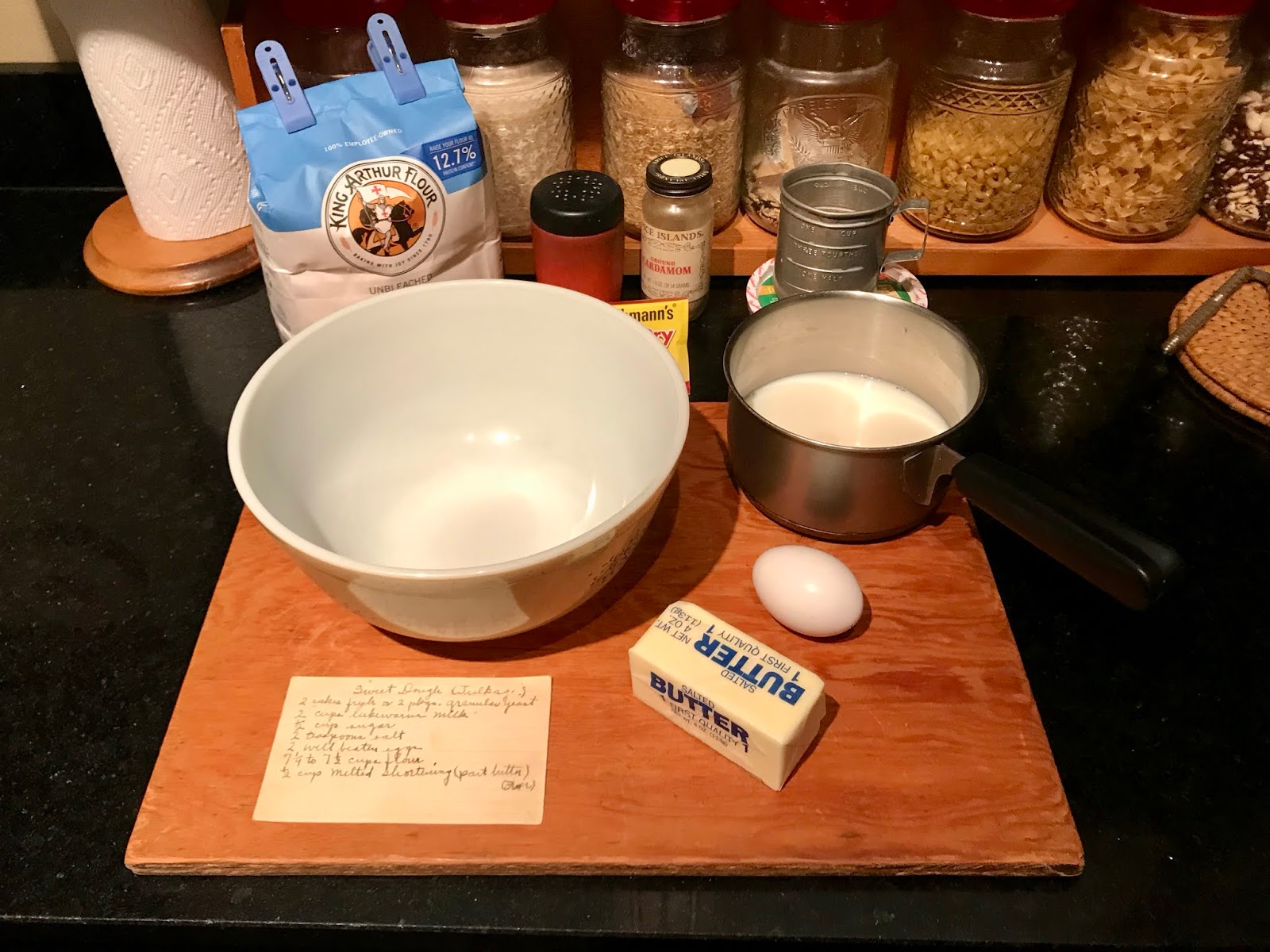
Mom's recipe file had two cards, one in Grandma's handwriting and one in Mom's. Using them I created a recipe for a single loaf.


Norwegian Yule Kaga


Scald milk then add butter and sugar.
Ingredients:

1 cup milk (scalded)
1/4 cup butter (melted)
1/4 cup sugar
1 pkg active dry yeast
3 tablespoons lukewarm water
1 egg (beaten)
3 1/2 cups flour
1 teaspoon salt
1/2 cup raisins
Activate yeast in warm water.
1/2 cup citron
1/2 teaspoon ground cardamon

Directions:

Scald the milk. I had to look this up. Bring the milk to almost boiling then allow it to cool slightly. Add the butter, sugar, salt and cardamom and let the mixture continue to cool until
Add egg and yeast to cooled milk.
lukewarm.

Dissolve the yeast in lukewarm water (100-110 degrees). If the water is too cold, the yeast won't activate. If it is too hot, the yeast will be killed. Stir occasionally. The yeast gets bubbly, releasing carbon dioxide gas, the stuff you need to make bread rise.
Beat mixture then add half of the flour.

When the milk mixture is cooled, add the dissolved yeast followed by the well beaten egg. Beat the whole mixture until everything is fully incorporated and smooth.

Then add 1 1/2 cups of the flour. Beat thoroughly. I used a wire whisk but this could be done with an electric mixer.
Mix in the raisins and citron.

Add the raisins and citron and blend together while the dough is still in a liquid form.

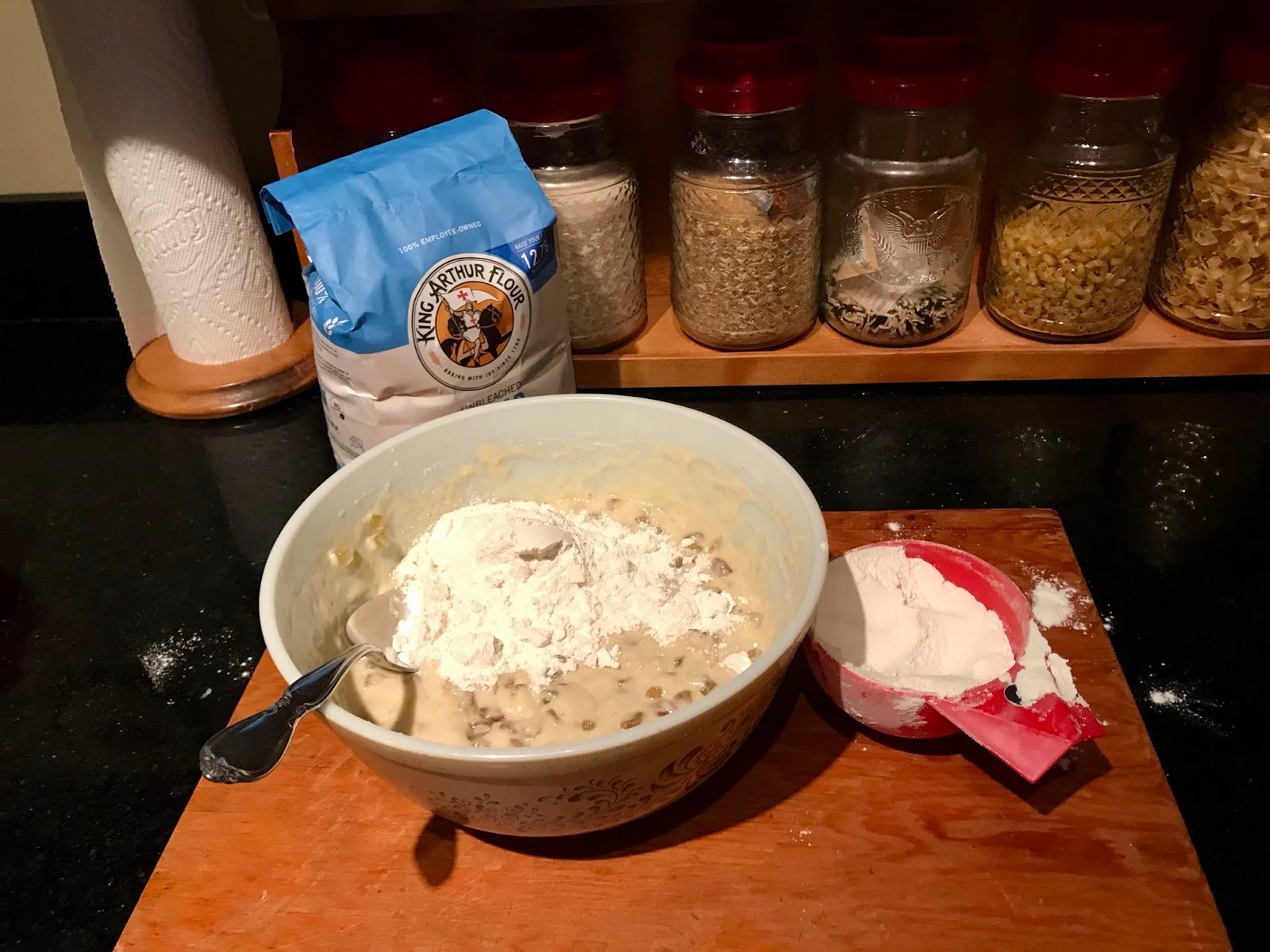
Add the remaining flour a little at a time. At this point I switched from the whisk to a large wooden spoon. At the end, it was easier to mix the last of the dry flour in with my hands.
Add remaining flour slowly.

Turn the dough out onto a floured board. Knead for 8-10 minutes until the dough becomes smooth and elastic. Work in any citron and raisins that escaped.

Place dough in a large greased bowl. I used soft margarine. Roll the dough over in the bowl to get some of the margarine on top of
Knead on a floured bread board.
the dough to keep it from drying out. Cover the bowl. I used plastic wrap covered with a tea towel. Grandma's recipe card called for a damp cloth.

Let the dough rise in a warm place for about two hours, or until double in size. Mine took one and a half hours in front of the fireplace.
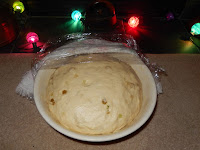
Let the dough rise in a warm place.

Punch the dough down and form it into a round loaf.

I used 9-inch cast iron frying pan for my round loaf.  I lined it with parchment paper and moistened the top of the dough with cooking oil spray. Loosely cover. I used plastic wrap again. 
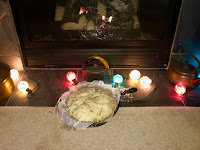
Form a loaf and let it rise.
Place the dough in a warm place and let it double in size again (about 45 minutes).

Bake in a 350 degree oven for 40-50 minutes or until golden brown. Test by tapping the top with your finger. It should have a hollow sound when it's done.

Remove the bread from its pan
Bake until golden brown.
and cool completely on a rack. If you like a crispy crust, store it in a paper bag. If you want a soft crust, store it in an airtight plastic bag. 

For me, Yule Kage is not complete without gjetost cheese on top. The brand I find in the States is Ski Queen.

It's a semi-hard cheese made from whey, milk, goat milk and cream.  It has caramel colour, has a unique flavour, and melts in your mouth. It always reminds me of going to Grandma's house for Christmas.

Cooling and ready to eat.

I couldn't wait. I cut a slice, toasted it with butter, and topped it with gjetost. Closing my eyes I could feel my family enjoying Christmas and New Years morning with me once again.

Do you have any traditional holiday foods that make you feel connected to your heritage? -- Margy

Saturday, November 30, 2019

"Chasing Smoke: A Wildfire Memoir" by Aaron Williams

Wayne and I are on a Snowbird RV Adventure in California (click here). We've driven through smokey haze as strong winds drove flames through tinder dry foothills.

British Columbia's fire season typically runs from July when the forests dry out through October when fall rains arrive.

Chasing Smoke: A Wildfire Memoir by Aaron Williams (Harbour Publishing, 2018) seemed an appropriate reading choice considering what was happening around us.

Aaron Williams was a BC firefighter with the Telkwa Rangers from 2006 to 2014. Chasing Smoke focuses on the 2014 forest fire season, his last.

Ash layer along Powell Lake shore.
The last major fires along Powell Lake were in 1915 and 1918. We found evidence of the ash layer while digging on shore near our Powell Lake float cabin.

Goat Island disappeared in the smoke.
We do get thick smoke that blows west over the coast range from fires in BC's interior. Everywhere, firefighters and other first responders are putting their lives on the line for all of us.

Through his memoir, Aaron takes us through a summer of preparing for and fighting forest fires. You meet the Telkwa Rangers and learn how they work together to contain some of BC's worst fires like the Euchiniko Lakes fire, the China Nose fire, and two tours on the Chelaslie River fire that became the third largest in BC.

Training begins in May with a Rookie Week for the new recruits, some of whom are students looking for a summer of adventure and a way to earn money. Not an easy way for sure.  In telling the story, he gives you a good feel for life at base camp, in camps where firefighters stay during fourteen-day deployments and on the line fighting and mopping up after fires. Life is filled with highs and lows, and a lot of camaraderie in-between. Here's an informative video by CBC's The National.


As the fire season winds down, so does Aaron's career. You don't know what will happen next, but you do know that he will become an author with a strong voice and the ability to carry a tale to it's end.  

Chasing Smoke is available online at Harbour Publishing and Amazon. It's also available in bookstores and Kindle format.


If you want to read about BC fires from the perspective of people living through them, here are two recommendations. One is written by an author I've become acquainted with, Chris Czajkowski. The other she co-authored with a friend who lived through the same fire.

Wildfire in the Wilderness is by Chris Czajkowski (Harbour Publishing, 2006). You can read more about his amazing woman on her blog, Wilderness Dweller. The book tells about the life Chris lived in a remote cabin/resort she built called Nuk Tessli and how she lived through and was evacuated from her wilderness home during the Lonesome Lake fire of 2004.


Captured by Fire is co-authored by Chris Czajkowski and Fred Reid (Harbour Publishing, 2019). In 2017, fire returned to the region at Kleena Kleene and Colwell Lake. By now, Chris was living in an off-the-grid homestead. She and her friend, Fred Reid, also a homesteader, both refused to evacuate during the massive fire. The book alternates between their stories about how the fire affected their lives, homes and how it was fought. -- Margy

Saturday, November 09, 2019

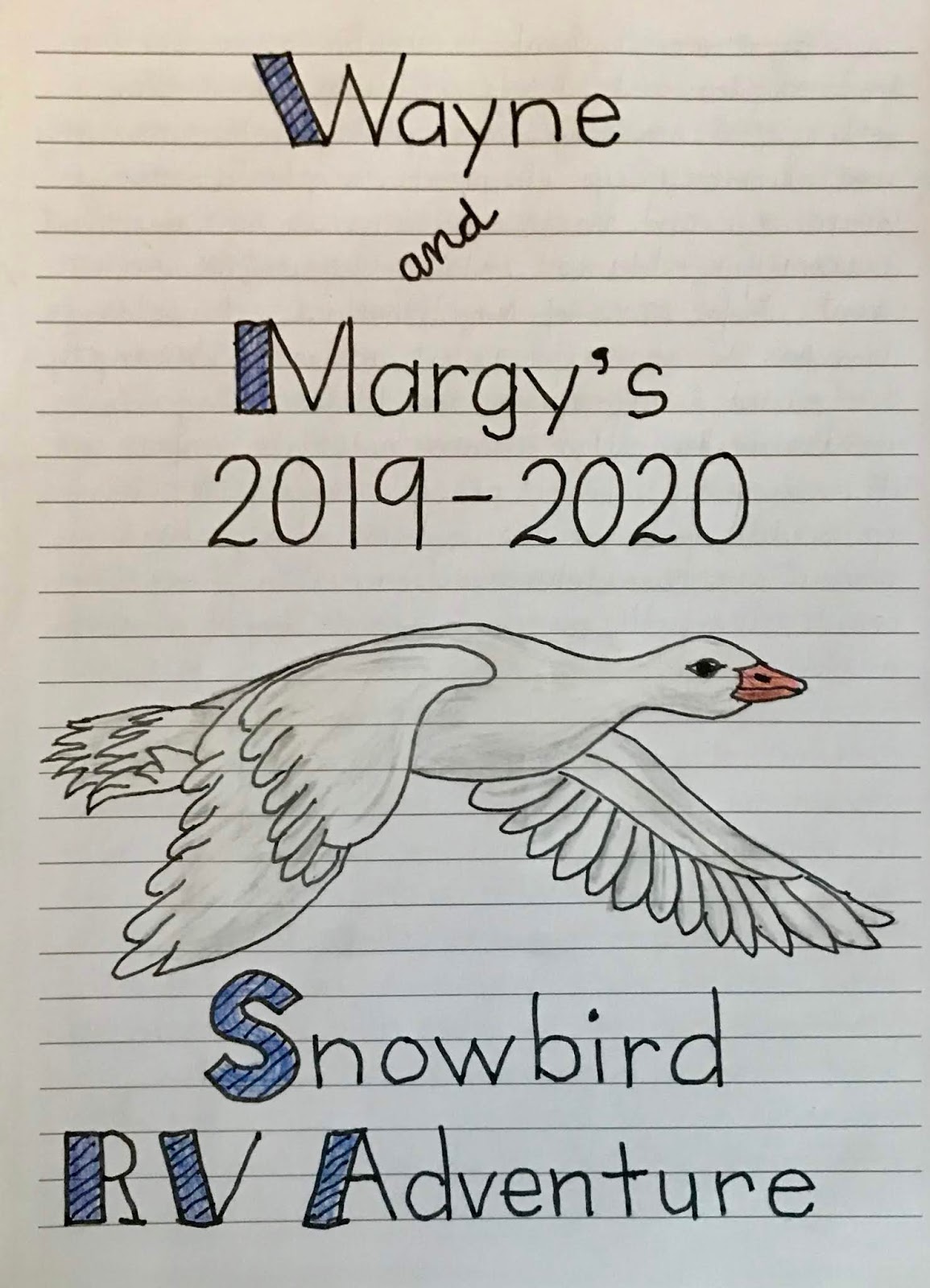
Wayne and Margy's Snowbird RV Adventure Update

Wayne and I planned for months for our first Snowbird road trip in the RV we purchased last April.

This time of year it gets darker, colder and wetter at our float cabin on Powell Lake. Sun and warmth are calling. Just like the geese, we are migrating south.

An early November departure was perfect to beat snow and ice in the pass between Oregon and California, and we skipped winterizing our RV. That was a win-win.

We picked a Forest River Sunseeker 2250 specifically for this adventure. We like the small size for maneuverability and easy parking. It's been a perfect rig for us even on long trips.

The overall 24'4" length of the Sunseeker packs in a lot of living space.


We've planned a three part trip.

Part 1 - We left Bellingham on November 4. For 43 days we explored and camped our way from Washington to Southern California. In mid-December, we put the RV into storage in Southern California, went to USC for basketball and then flew back to Bellingham for a break. You can reading about this leg of our trip by visiting my Margy Meanders Blog and scrolling down.

Part 2 - starts in early February when we fly south to pick up our RV. We'll drive to Arizona for more exploring and a stay in Tempe for Arizona State University softball. Are you seeing a trend here? College sports? In late February we'll store our RV in Tucson then fly back to Bellingham for a second break. You can keep up with us by visiting my Margy Meanders Blog.

Camping in public parks gives you more privacy and nature.

Part 3 - starts in late March. We'll fly to Tucson to pick up our RV for the final leg. There'll be more ASU softball before heading back north. We hope to make it to Oregon State University for more softball, and anticipate arriving back in Bellingham in mid to late April, after all of the freezing weather has passed.

Private RV parks offer more amenities and full hookups.

Does this sound complicated for a relaxing winter vacation? Maybe, but we aren't the kind of Snowbirds that like to stay in one spot. Our good friend John says we live a complicated simple life. But that's the way we like it.

Come along with us at my Margy Meanders Blog to see what's happening on our Snowbird RV Adventure. I'll write posts along the way when we have Internet. I hope you enjoy our trip as much as we do. -- Margy

Sunday, October 27, 2019

Annual Boat Maintenance at Valley Marine in Powell River

Valley Marine boat services in Powell River.
Winter is a good time for annual boat maintenance. The shops are less busy, and long months of inactivity are hard on boats. Having ours in top shape makes us confident it will be ready whenever the weather is good.

Our Bayliner 2452 called Halcyon Days needed to be scheduled for annual winter maintenance, so we asked Jeff Munro at Valley Marine to arrange for transportation from our moorage in Powell River's North Harbour to his shop in Paradise Valley.

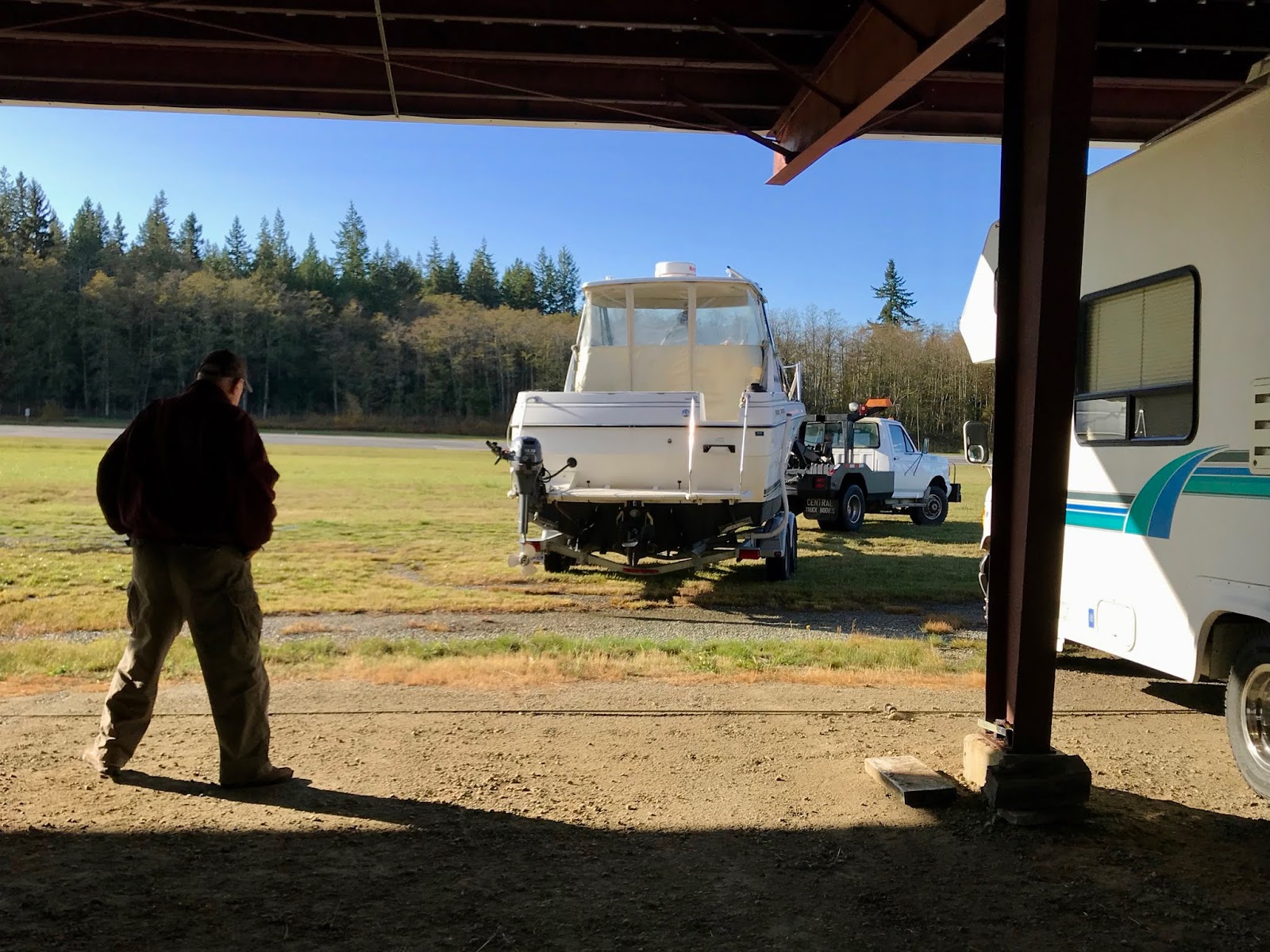
This week Jeff called to let us know everything had been completed. He met us at our storage hangar and backed Halcyon Days right into her spot. Now that's great service!

Jeff backing Halcyon Days into her hangar winter storage spot.

Here's Halcyon Days all tucked away for the cold, wet, windy winter months. Looks like she'll have lots of good company and a great view.

Halcyon Days will have protection and good company all winter long,

Halcyon Days will be back in the water in May, ready for new adventures like the ones in Wayne's books Up the Strait, Farther Up the Strait and Up the Inlet (shameless plug).

Thanks Jeff and Valley Marine! If you are in need of excellent boat maintenance and repair services, give them a call:  

Valley Marine
3407A Padgett Rd
Powell River BC,
Phone: 604-485-9257

They also have boating supplies, shrink wrap service, storage and an upholstery shop onsite.

Say "Halcyon Days" sent you. -- Margy