Sunday, November 13, 2016

Moonrise Under the Treetops

Powell Lake, BC, is our home. We live right on it's surface in a cabin floating on logs. It can be a pretty choppy place, especially when the wind blows or boaters leave wakes behind.


But near our cabin at the entrance to a spot called Hole in the Wall, it's usually pretty calm. I love the reflections that develop. Here's one of the moon coming up "under" the treetops across the bay.


There was just enough movement to the water's surface to make it look like a watercolour painting if you turned the photo upside down, or is that right side up?

Want to know more about cabin life? Take a look at the category called Float Cabin Living.

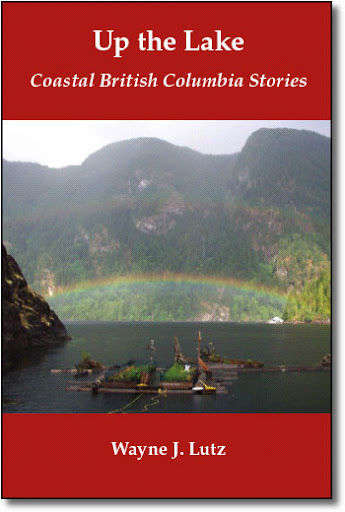
Wayne's book Up the Lake tells the story of our first years "up the lake."  You can get it free for e-readers at Kobo, Amazon.com, Amazon.ca, and most online book sellers. If you enjoy it, there are twelve more titles in the Coastal BC Stories series. -- Margy

Saturday, November 05, 2016

Coastal BC Insects: Hover Fly

A tiny Hover Fly on a marigold.
There are lots of mimics in the animal world. Watching flowers, you see many insects taking advantage of their pollen and nectar. From a distance, we sometimes assume they are all bees, but on closer inspection that’s not always the case.

A larger Hover Fly sharing the marigolds.

Some Hover Flies mimic wasps in shape and colouring, but don’t sting. Wasps have long antennae and a cylindrical abdomen, while Hover Flies have short antennae and a flattened abdomen.

Hover Flies are attracted to flowers just like bees and assist in the process of pollination. They are especially good to have around with the recent problems we’ve had with the decimation of bee populations.

Syrphus torvus Hover Fly.

Larvae of Hover Flies often feed on aphids, an added bonus to have them around your yard and garden.

There are many varieties of Hover Flies. The larger one above I believe is called Syrphus torvus. It’s very common in Europe, Asia and North America, and can be found throughout Canada.

Sphaeronphoria scripta is a small Hover Fly.

Here’s another kind of Hover Fly enjoying my marigold flowers. I didn't realize that there were so many different kinds. It’s also a wasp mimic. I believe it is a variety of Sphaerophoria, possibly a Sphaerophoria scripta. It has worldwide distribution, so it's probably a good guess. I believe this is a female based on the fuller abdomen. Males have a long, slim shape.

Notice how the wings look at rest.

References: Bugs of British Columbia by John Acorn and Ian Sheldon, BugGuide.net (online), and the Etomology Collection of the University of Alberta. - Margy

Thursday, November 03, 2016

Canning: Spiced Canned Apples

Spiced Canned Apples
I’ve been canning a lot this year, mostly things from my garden. I wanted to make some spiced canned apples, I don’t have an apple tree. I priced of apples at the store and decided to forget it, until my good friend John gave me a bag of gleaned apples from the tree in the Dodd Lake campground.

Using free gleaned apples.
I’ve made spiced canned apples before, but looked at recipe online for ideas, then used the tested one from my Farm Journal's Freezing and Canning Cookbook.

I peeled and sliced the apples, placing them in water with lemon juice to retard browning.

I chose to make medium sugar syrup. Next time I’ll use thin syrup to make them less sweet. Here are the proportions from the cookbook:

Sugar Syrups for Canning
Type
Sugar Cups
Water Cups
Yield
Thin
2
4
5
Medium
3
4
5 ½
Heavy
4 ¾
4
6 ½


Draining apples.
I put 6 cups of water and 4 ½ cups of sugar (one and a half time the medium amount) to make sure I would have enough for all of my apples. I heated it to boiling in a large pot and added spices (1 teaspoon allspice and 2 teaspoons cinnamon) tied in cheesecloth. This kept the dark ground spices out, but allowed the flavours to infuse the syrup.

Cooking the apples in syrup.
Next I drained the sliced apples, added them to the boiling syrup, and cooked them for 5 minutes. In the meantime I was preparing my water bath canner and sterilizing my pint jars. To keep the jars warm until the moment of filling, I put them in the oven at 250°F.

Filling canning jars.
Just before filling, I added one cut to fit cinnamon stick to each jar. I ladled the cooked apples into each jar and filled them with hot syrup to ½” head space remaining. Sterilized lids and rings closed each jar, and they were processed in a water bath canner for 15 minutes.

Into the water bath canner for 15 mintues.
After five minutes rest in the hot canner, they were placed on a towel to cool and seal. I love to hear that distinctive snap.

I had enough apples for five pints with a little bit extra, and there was syrup left over. I decided to add a few more diced apples to cook down into applesauce.

Mashing remaining apples for applesauce.
I simmered them in the sauce and then used a potato masher to make chunky sauce. I filled half-pint jars with ¼” head space they went into the water bath canner for fifteen minutes.

Waste not, want not. I use propane tanks to power my stove, so reusing a large pot of hot water is a real savings.

Five pints of Spiced Canned Apples and three half-pints of chunky applesauce.

Now I have five pint of spiced apples and three half-pints of applesauce to enjoy as winter progresses. And, I know where to go next year to get even more apples. Thanks John! -- Margy

Tuesday, November 01, 2016

Yvonne Maximchuk: Painter, Potter, Author

Drawn to Sea by Yvonne Maximchuk
I love to read about Coastal British Columbia. I found a book in the BC Ferries gift shop called Drawn to Sea: Paintbrush to Chainsaw – Carving Out a Life on BC’s Rugged Raincoast by Yvonne Maximchuk and bought it on the spot. The cover is one of her paintings of our magnificent coast. (Click here to read my review).

I’m a nosy kind of reader. I want to know more about authors I enjoy, especially strong independent women. I found her website and Facebook pages.

Yvonne at Okeover Inlet near Powell River.

A month ago I saw she would be in nearby Comox giving watercolour classes. I inquired about book events. She said no, but maybe we could get together. Wow! I know she's lived in a floathouse, so I invited her to spend the night in my float cabin on Powell Lake.

Up at the float cabin on Powell Lake.

I met her at the ferry and we hit it off right away. After checking in with Wayne, we headed to Magpie’s in Cranbrerry for lunch, then drove up to Lund. We stopped at Okeover Regional Park, the Tug Ghum gallery, and Nancy’s Bakery for cinnamon buns.

Back at the Shinglemill Marina, we got in the Hewescraft for the 25-minute boat ride up to Hole in the Wall. At the float cabin we enjoyed a leisurely dinner with fine wine (thanks to Yvonne) and talked the night away – woman talk like woodstoves, electrical systems, gardens, writing, and life in Coastal BC. Having a guest who understands me and my lifestyle was unique.

The artist in action.

The next day we took the boat around Goat Island. Even with the cloudy skies and showers it was a grand tour. We even met up with our good friend John and Wayne along the way. They say time flies when you are having fun, and my weekend with Yvonne was just like that.

Check out Yvonne’s books. Drawn to Sea is her memoir, and she has co-authored books with Billy Proctor, Echo Bay’s most famous resident.

Yvonne sketching my float garden.

And her artwork is amazing. While Yvonne sat on my front porch, she sketched my float garden in her journal. I’m so honoured.

Information about Yvonne Maximchuk:

www.yvonnemaximchuk.com
Yvonne Maximchuk on Facebook
Yvonne Maximchuk; Painter, Potter, Author

Books by Yvonne Maximchuk:

Drawn to Sea a memoir by Yvonne Maximchuk
Full Moon, Flood Tide by Bill Proctor and Yvonne Maximchuk
Tide Rips and Back Eddies by Bill Proctor and Yvonne Maximchuk
Colour the British Columbia Coast a colouring book by Yvonne

Artwork and Pottery by Yvonne Maximchuk:

Paintings by Yvonne
Pottery and Prints
Books and Cards
Art retreats at SeaRose Studio in Echo Bay

Thanks Yvonne. You are a great author, talented artist, and now I can count you as my friend. -- Margy

Tuesday, October 25, 2016

All Fall Down

Fall has come and is quick to go. After a recent windy storm, the maples let loose of their leaves.

And they graced the surface of our watery front yard just before sunset.

Watery front yard you ask? Yes, we live in a float cabin on (literally) Powell Lake in British Columbia.


If you would like to learn more about this type of lifestyle, take a look at my categories Float Cabin Living and Float Cabin Construction. If you have any questions, just leave a comment and I'd be glad to answer them. -- Margy

Friday, October 21, 2016

Blacklight and Reflections

On a partly cloudy day I saw this interesting view of my floating vegetable garden. The dark clouds made the background black as night.

Yet the ray of sunlight on the garden made it standout in stark relief.

My floating Garden on Powell Lake, BC.

And created a beautiful reflection in the calm lake surface. -- Margy

Wednesday, October 19, 2016

Coastal BC Spiders: Cross Orbweaver

Cross Orbweaver

The other day I went out to work in my garden and found this Cross Orbweaver spider using my lean-to as its new home.

Lately, I've been seeing more spiders around the cabin and they are a welcome sight. Anything that catches pesky flying insects is a friend of mine.

The Cross Orbweaver (Araneus diadematus) is also known as the Garden Spider. This is a female, distinguished by her large oval abdomen. Males have a smaller, thinner abdomen. 


Cross Orbweave spiders can be found in gardens and fields in many states in the U.S. and provinces in Canada. Females lay up to 800 eggs in a sac near the web from late summer to fall.  After hatching, spiderlings can travel to unexpected locations by "ballooning" through the air on silken threads. I see this quite often on Powell Lake. Landing on the water must make for a rude awakening.


These spiders weave large, vertical orb shaped webs. They either reside near or right in the center of the web. Either way, they are connected by a thread to determine if a meal has landed. An unlikely fact I learned is that the spider usually eats the web at night, and recycles the proteins contained within to create a new web the following day. That's a lot of work!


Here's a tasty meal all wrapped up for consumption. It's hard to tell, but it looks like a yellow jacket. We get a lot of those around the cabin. Can't say that I feel bad about it getting caught. -- Margy

References: www.Spiders.us (online), Post Defiance blog by Katy Evans (online), and Cross Orbweaver at Bugguide.net (online)