Tuesday, February 05, 2013

Hot Water Heater

Our float cabin is off the grid.  You can live simply, or with lots of modern innovations.  For hot water, many people have chosen tankless hot water heaters run by electricity (solar or generator) or propane.  There are also wood stoves that generate hot water.  You can make your own, or purchase one with that feature built in.

Wayne and I have chosen to adopt a simpler solution.  We like to have hot water for cooking, washing dishes, cleaning, and winter tub baths (lake water is just fine in summer).

 
We use pots and pans on top of the wood stove to heat water. From October to May, we have daily fires.  In the middle of winter, they last all day.  You can heat a lot of water in that amount of time. 

On bath day, four large pots on top of the wood stove will give us enough hot water for a bath in our regular size tub in our new bathroom.  Plus the extra heat needed to get it boiling warms up the cabin for when we are done.

Add an equal amount of cold water and that's all you need for a good scrub and soak.  Well, that's all you need for a shared bath that is.  But it's double the fun to get clean with your good buddy. -- Margy

Sunday, February 03, 2013

Puddle Jumper

Every season has it's own beauty.  Quad riding in the bush during winter can be a wet, messy experience.

But fog in the trees and reflections in the puddles make for a serene experience. -- Margy

Wednesday, January 30, 2013

Float Cabin Living

In 2001, Wayne and I discovered our float cabin on Powell Lake in Coastal BC.  In the beginning, we could only be there on school holidays since we were both educators. Now we can be in our off-the-grid cabin home about 75% of the year in all seasons.

Coastal communities are linked primarily by the ocean, rivers, and lakes. In the water world, floating cabins were traditionally used for logging and fishing camps. Today on Powell Lake, they are recreational getaways for locals and visitors from around the world.

Our cabin is built on a 40X40 foot cedar log float. The cabin is 675 square feet including a great room for our kitchen and living area, guest bedroom, storage room, bathroom, and a large loft bedroom. We use solar, wind and thermoelectic power augmented with a gas generator in winter. Our stove, refrigerator, and lights use propane. Our wood stove provides heat, we get our water directly from the lake, and our toilet uses composting technology.  It's a simple living arrangement that brings us a lot of pleasure.

Here are some links for more information:

Off Grid Float Cabin
Hole in the Wall
Float Cabin Living
Float Cabin Construction
Powell River Books

If you have any questions, please leave a comment or use the e-mail link in my profile. -- Margy

Monday, January 28, 2013

Cooked Sweats

This isn't my normal kind of Monday cooking post. But back up too close to a wood stove, and you just might "cook" your buns, literally. You can see that I did just that to a pair of sweat pants.

The synthetic fabric first melts, then becomes brittle. A hole in a critical spot in the cold country can make for quite a draft in unwelcome places.

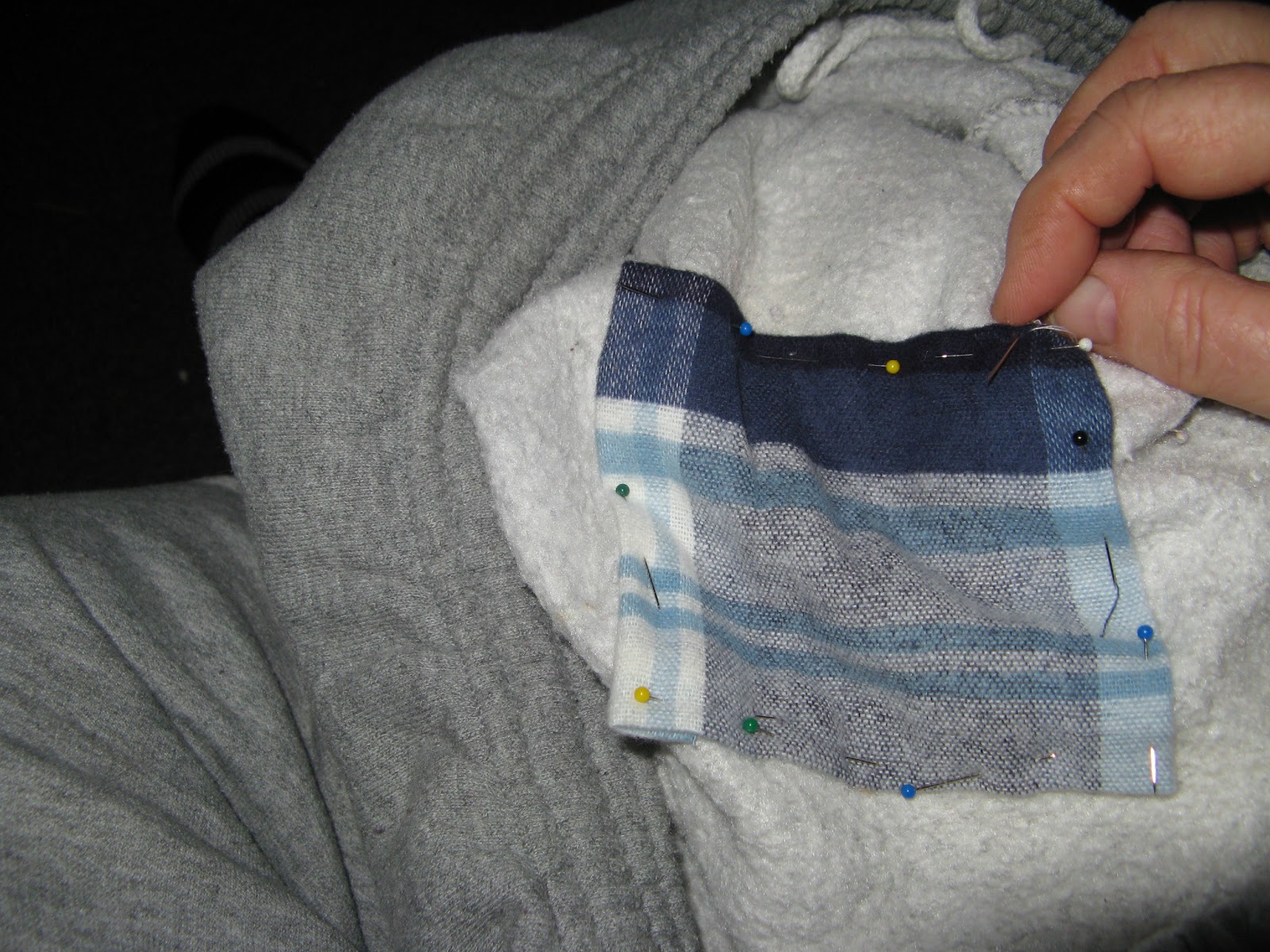
So, after a few wearings of my holey sweats I got out my trusty needle and thread, and a piece of flannel sheet fabric from my sewing drawer. First I stitched the melted edges back together.

Then I sewed a flannel patch on the inside to keep the rough edges of the melted pant leg away from my skin. Then I repeated the process with another patch on the outside to hold the hole together during washing and wearing.


Now I can back up to the wood stove and warm my buns without burning.  That's what I call a recipe for success.

Do you mend and patch still?  It was something my mother and grandmother did regularly.  Now that we are doing things in a more simple manner up at the cabin, I've put into practice some of the things I saw growing up. -- Margy

Sunday, January 27, 2013

Goodbye Stumpy

Because our cabin floats, it moves back and forth, and up and down with the lake.  Steel cables anchor us in place, and log booms provides a floating barrier to protect us from wind waves and wakes.

We augment the boom in front with stumps. They are decorative and the deep roots help settle rough water.

Sometimes the lake decides to take our stumps back. A few weeks ago, we had strong winds. The next morning I saw that Stumpy was missing.

I looked out and saw him floating towards the narrows. After it calmed, we tried to retrieve our wayward stump, but couldn't get him to tow straight.  After several tries, we decided to say goodbye to Stumpy.


We wish him well and thank him for the protective service he provided while visiting our cabin home. -- Margy

Saturday, January 26, 2013

Garden Bunny

I know it's still January and the heart of winter, but my mind keeps jumping ahead to spring. Bunny has been with me since 2003, the first year of my floating garden.  In 2010, he got a facelift and had reconstructive back surgery so he could continue with his garden protection duties.


He's actually a movie star bunny.  Recently he was seen on duty in Hole in the Wall on the travel channel.  Right now there's only a few hopeful Grape Hyacinths ready for some warm weather to go with the moist rains.

Soon he'll have a whole garden full of flowers and vegetables to guard.  And maybe his Easter Bunny brother will stop by with some extra treats. -- Margy

Friday, January 25, 2013

Just a Dusting

It's been such a mild winter. The last time we were up at the cabin, we only got just a dusting of snow.


Even Goat Island didn't have much to show. On the other hand, we didn't have to shovel or sweep any off the roof.


Last year we had a storm as late as March, so there's still some time for snow play. -- Margy