Thursday, August 19, 2010

Skagit River by Sea Kayak: Day 2

We woke from a restful night in our tent. Our camp gear is compact to fit into the three hatches of our Current Designs Libra XT. It's their largest model, 21.8' long and 32" wide, making it very stable in the water (I like that). We only needed to make one trip from the campsite, and we only needed the front and back hatches to stow our gear, plus a few items we wanted en route stashed in cockpit dry sacks.

Another resource Wayne purchased online was Paddle Routes of Western Washington: 50 Flatwater Trips for Canoe and Kayak. The author, Verne Huser, also collaborated on the book I mentioned yesterday, so there's a lot of overlap and similarities. We both tried web searches, but for some reason, few people have written about this section of the river. Today's trip would take us from Rasar State Park to a mid-river Ross Island north of Sedro-Woolley.

After our short paddle yesterday, I felt a bit better about this new experience. The river was wide and deep in most places. When it made a turn, the water cut a steep bank into the outside shore. One such bank was drilled with holes by nesting Bank Swallows. You could hear them calling as they flew low over the water grabbing insects. The inside shore was usually a wide gravel or sand bar.

We traveled light with snack foods. Fruit cups, trail mix, breakfast bars, juices, and I'll admit it, candy. That's enough to start and end the day, but one substantial meal is nice. So we went to the Lyman Tavern for a hot lunch then went up to the market for more water (we really underestimated our needs), snacks, and an ice cream (yum). To get to Lyman, you have to enter a shallow back bay and climb the rock retaining wall to a riverside path. Main street, the pub, and the market on Highway 20 are in easy walking distance.

With full tummies, we got back in Mr. Kayak. Two hours of paddling took us past massive log jams on islands and dotting sand bars. We had to be careful to weave our way around huge stumps and trees jammed into the bed of the river. These snags can be dangerous if you get too close. But we got pretty good about reading the water to figure out the location of ones hidden below the surface.

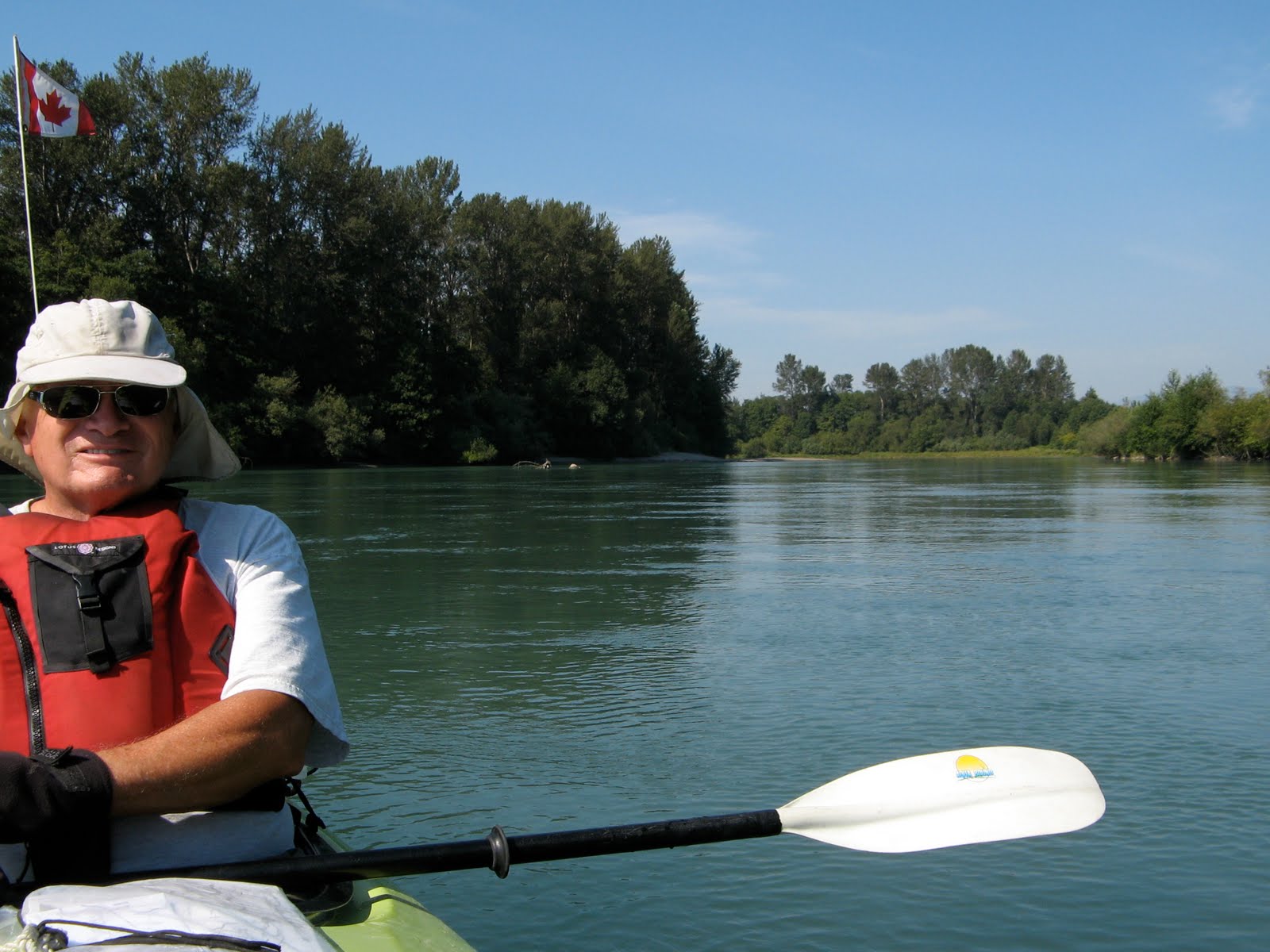
Just north of Sedro-Woolley is Ross Island, historically a native site and homesteaded by Alexander Ross. We found a gravel bar on the north side to take out and pitch our tent. We arrived early so we took out our Therm-a-Rest pads to lounge in the shade and read. Over the crest of the bar we could hear voices coming down the river. Then we heard the cry, "Canadians." We have a small flag on a rod at the back of Mr. Kayak to help make us more visible on the water. Two young locals came ashore to say hi. They were floating from Lyman to Sedro-Woolley the "easy way" in tubes. Looked pretty "hard" to me.

The day ended with a spectacular sunset.

Things we learned on day two:

  1. Drink water frequently.
  2. We need at least a gallon each day.
  3. Use sunscreen liberally.
  4. Cover your lap with a tea towel to prevent burned inner thighs.
  5. Wear a hat for better vision on glaring water.
  6. Stop for breaks along the way.
  7. Take time to explore your surroundings.
Wayne and I are not highly experienced paddlers. Make sure you get expert advice before starting out on your own. Ask locals, visit sporting goods stores, read books, check the Internet. It's better to be safe than sorry. - Margy

Tuesday, August 17, 2010

Skagit River by Sea Kayak: Day 3

The last book we purchased while planning our kayak trip on the Skagit was Sea Kayaking from Mountains to Ocean by Dan Baharav. Dan is from Bellingham and has written about local rivers he has paddled in his single sea kayak. He has a nature and environmental focus to his writing in addition to paddling information. His book included the northern section of the river down to Rasar State Park, but didn't pick up again until Sedro-Woolley. But that was perfect for our third and final day.

We rose early with the sun coming over the trees. Wayne chilled our fruit cups in the river before serving breakfast on our log. We discovered how important a big log is to the camp environment. It was our bench, backrest for improvised chaises using our Therm-a-Rest pads, line for drying wet clothes, and all around storage area. We wanted to start early because this would be our longest day of paddling. From Ross Island we would continue down river past Sedro-Woolley, under I-5, into Mt. Vernon, and finally the tidally zone of the river delta.

During the night we heard lowing cattle and barking dogs from the farm across the water. Then coyotes began to sing to the setting moon. The lapping water lulled us to sleep under a star-filled sky. While we had a quick "breakfast" on our log, we watched three herons fishing in the shallows. Then it was into the kayak and on our way.

On this leg there were many more log jams and snags to avoid. They were the heaviest between our campsite and just below I-5. In two places, the water got shallow and we had to pull up our rudder, but we never went aground. In one place we took the wrong channel, but there was just enough water for us to skim over the rocks on fast running ripples. Don't tell Wayne, but I thought it was kind of fun by then.

We saw only one boat of fishermen on the upper river. Nearing Sedro-Woolley, we saw them again. As we floated by, they serenaded us with a rousing chorus of "O Canada." Our flag got us again. The area became more populated with cabins, homes and resorts along the high river bank. By this time we had been paddling for about two hours, so we decided to take a short stretch on one of the many gravel bars. While we were there, we saw two fishermen trying for Dolly Varden (large trout-like fish). The river also has steelhead and salmon in season.

Going under a roadway bridge was noisy enough, but when we got to the I-5 freeway with its four lanes of fast traffic, it was a cacophony of sound. We couldn't paddle out from underneath fast enough. Here the banks were topped with high earthen dikes to protect the farmlands beyond. The elevation is at or near sea level, so flooding is a common occurrence. Only rooftops and upper windows of the houses beyond were visible. But on a few banks there were little shacks above tiny floating docks. We weren't sure what they were, maybe fish shacks used when the salmon and steelhead are running.

We stopped in downtown Mt. Vernon for a late lunch. The best choice was Edgewater Park with its flat beach. We tied Mr. Kayak to a snag, asked a couple if they would keep an eye on it (small world, they were from Concrete) and climbed the trail to some much needed sustenance. Across the street from the park entrance, Las Coronas was perfect. We stuffed ourselves with chips, salsa, tacos, enchiladas, and a tostada. You'd think we hadn't eaten for days. We barely squeezed back in our cockpits.

Now the real work of our trip began. Wayne checked the tides, but it takes quite a while for the ebb tide to have an effect this far upstream. The river current was down to 1 mph and we picked up a headwind shortly thereafter. In the tall trees we finally saw and heard some Bald Eagles. These must be resident birds. When the salmon arrive in winter, this whole river system becomes a haven for them. At Fir Island, we went to the left down the South Fork. The river was still wide and deep, no sign of the delta mudflats yet. At 4:30 we decided to call it a day and headed for the Conway boat ramp. We gave Jeanne a call and she came to our rescue in the Ford Tempo. What a great trip, and we still have the delta to explore on another day.

Things we learned on day three:

  1. Find a campsite with a big log.
  2. Even populated areas can be exciting to explore.
  3. A GPS is helpful to find places to eat.
  4. People are friendly and willing to help.
  5. Know your paddling limits.
  6. Being flexible is important.
Thanks for paddling along with us. Hope you enjoyed the trip as much as we did. -- Margy

Monday, August 16, 2010

Cabin Cooking: BBQ Pouch Potatoes

This year I grew potatoes in three places. The first was up on the hill using soil I've composted over the years. It's pretty dry up there, but I do get quite a few spuds if I am diligent about watering. My potato success story is growing them in barrels on the cabin deck. This year I grew two types, Norland red potatoes in one barrel and Yukon Gold potatoes in another.

This week I dug up my potatoes to store for later use. Here are the Yukon Golds. I dried them outdoors before wiping them clean with a dry paper towel. Rather than keep them wrapped in newspaper in a bucket like last year, I bought plastic baskets at the Dollar Store that fits nicely under the bed downstairs. That is the coolest place in the cabin, so I use it as "root cellar."

In winter, I cook potatoes inside the fire box of my wood stove. But now that it's summer, the BBQ is the quickest and coolest place. Here's my summer version of Pouch Potatoes.

Pouch Potatoes

The ingredients can vary, but my staples are potatoes, onions, green peppers and herbs. Start with a large rectangle of aluminum foil. Using a paper towel, spread about one teaspoon of margarine up to about one inch of the edge. Slice potatoes (enough for two servings) and place them on the foil. Top with sliced onions and green peppers. Sprinkle with salt, pepper and herbs. I like Rosemary, Thyme, Basil and Sage, but you can use whatever you like.

Pull the foil up and seal the edges by folding them over several times. This makes a cooking pouch that should not leak. Sometimes I use a second piece of foil to double the pouch, especially when I'm going to cook them in my wood stove. But on the BBQ, a little dripping doesn't hurt a thing. Cook for about 15-20 minutes over low heat on each side to get them crispy good.

Open the pouch and dig in. This time we used them as a side dish to go with Wayne's BBQ roast. Yum! -- Margy

Sunday, August 15, 2010

Garden Goodies

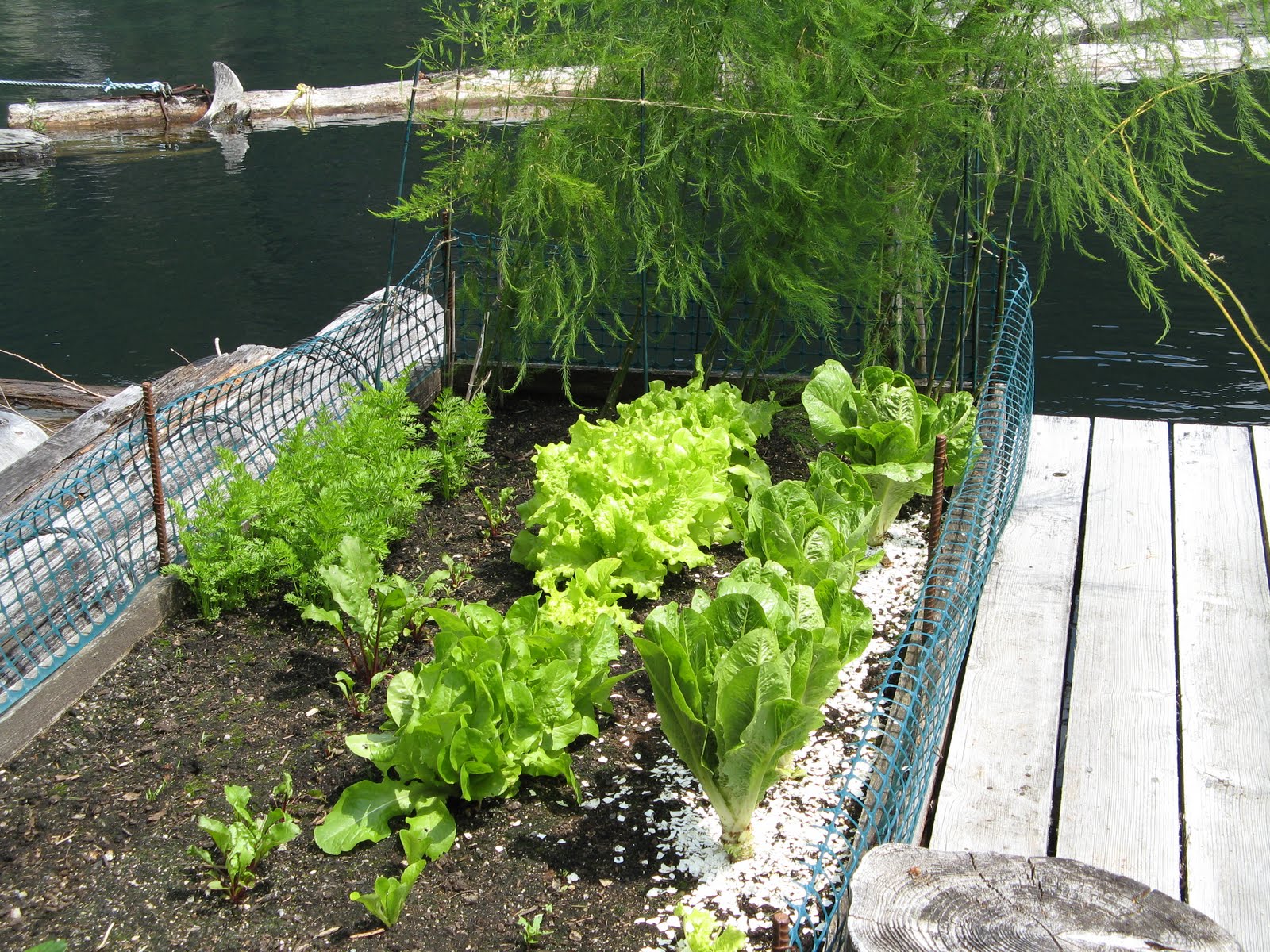
I’ve been a bit disappointed in my floating garden this year. I’m not sure why. I augmented the soil last spring and rotated my plantings as best I could. Many seeds never sprouted, and replanting didn’t fare much better. Part of the problem may have been the weather. We had a long cold wet spring that ran into a hot dry summer. And one end of my garden float has sunk down to water level, so it doesn’t drain as well.

But my plants in pots have been doing quite well. My Snow Peas just finished. I’m letting a few pods dry on the vine to save for seed. Now the Scarlet Runner beans are coming in to take their place. I chose that variety because the red flowers are an attractant for hummingbirds.

My green and banana peppers are starting to come in now. I tried pickling some of the banana variety, so stay tuned. I love them on sandwiches. I’ve also picked several cucumbers. After two dead starts, the Marketmore variety has been a success. The fruit is firm and sweet, just perfect for a salad.

Speaking of salad, my lettuce has grown into “trees” so it had to come out. It's was much sooner than last year. And my tomatoes are coming in later. Now if only I could get everything to coincide, I could make a complete garden salad. Maybe next year! -- Margy

Saturday, August 14, 2010

A Gaggle of Greedy Geese

Up until this year I’ve been thrilled when the Canada Geese come through showing off their new babies. But it is different this year. That’s because they finally discovered my floating garden. My short fence was no match for their desire to feast on my fragrant strawberries and luscious lettuce.

It has been doubly disappointing since the plants in my floating garden have been struggling this year. What the geese didn’t devour, they trampled with their big feet and heavy bodies. The “babies” are almost adult size already.

When I see them paddling through, I run out to protect what is left. They nonchalantly head on over to one of our garden logs on the breakwater and eat their fill. If geese had thumbs, I’m sure they would be giving me the high sign.

Next year I will need to rethink my garden fence to a sturdier, higher model. But will also need to be a removable one so that I can work and pick when they aren’t nearby. Does anyone have any suggestions? -- Margy

Friday, August 13, 2010

Hazy Shades of Gray

Hot weather with over a month of little or no rain has made British Columbia tinder dry. Last week there were over four hundred separate fires reported in the province.

While the majority were set by nature in the form of lightening, too many were set by people. Either way, it is sad to see such devastation. Two fires were started by dry lightening near Powell Lake. For three days, we started and ended the day with fiery solar displays.

But the middle of the day gave us mostly a hazy shade of gray with air that was hard to breathe. I can only imagine what it must be like in the interior where the majority of the blazes are raging still.

Here's an interesting website that displays the most "notable" fires of the season in BC. -- Margy

Tuesday, August 03, 2010

Bye-Bye Birdie Bye Bye

The baby birds have flown the coop. We returned to the cabin last week and saw both broods still snug in their nests.

A Violet-Green Tree Swallow baby had his head sticking out of the hole of the birdhouse on our shed. Mom and Dad were busy flying sorties with tasty bugs for his (by now) big mouth. Then the next morning, no one was left at the nest. I don’t know how many babies there were since only one at a time was visible. Unfortunately, we missed the takeoff.

Up above at the peak of the cabin, two large babies were visible in the Barn Swallow nest. Again, the next morning both were out flying. Unlike the tree swallows, the Barn Swallow babies are still hanging around. They like to perch under the porch, on the garden float and on our many floating log stumps. They are so much fun to watch.


Meanwhile, Mom and Dad are busy readying the nest for another brood. They rebuilt the sides to make it larger. Now Mom is sitting again, and Daddy Bert is singing his heart out to his lovely lady and taking some time out for a little home-grown fun.

That is, when he isn’t out amusing himself on the playground equipment. -- Margy